
Wood sanding is one of the most important processes in furniture manufacturing, cabinet making, woodworking, and interior decoration. A wood sanding machine ensures smooth surfaces, consistent thickness, and a flawless finish before painting, laminating, or coating. Whether you’re producing solid wood furniture, MDF panels, plywood cabinets, or wooden doors, choosing the right sanding machine can significantly improve productivity and product quality.
What Is a Wood Sanding Machine?
A wood sanding machine is a woodworking machine that uses abrasive belts, rollers, or sanding pads to remove surface imperfections, level uneven areas, and prepare wood for finishing. Compared with manual sanding, industrial sanding machines provide higher efficiency, greater consistency, and reduced labor costs.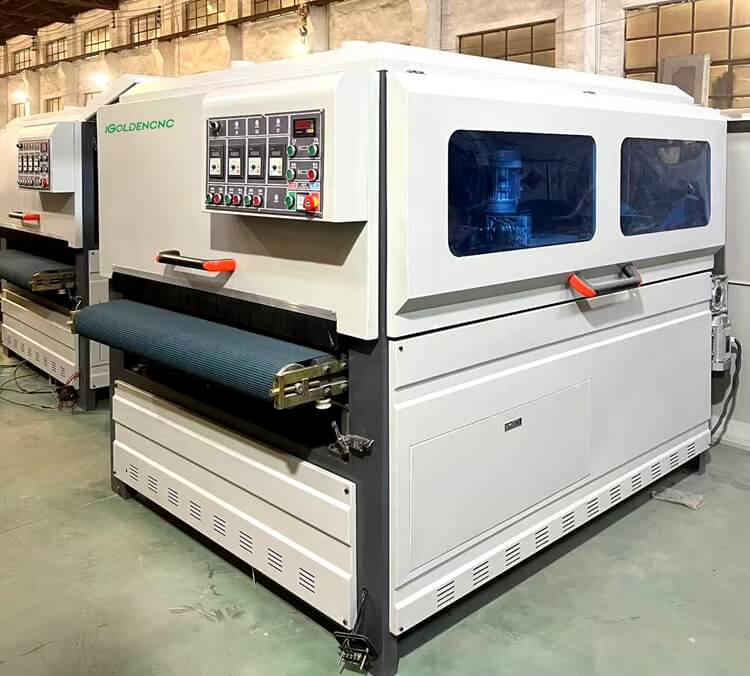
CNC wood sanding machine is a type of automatic power woodworking tool that uses sand roller, pressure roller, and automatic feeding system to sand and polish the surface of wood projects. It is also known as CNC wood sander, which is mainly aimed at wood panel processing industry, floor and wall panel processing industry, bamboo and wood handicraft processing industry, bamboo and wood toy processing enterprises.
It has the features of simple operation, high degree of automation, high production efficiency, mature and stable technology, and complete supporting facilities. It can be perfectly connected with automatic CNC machines to form various automatic production lines.
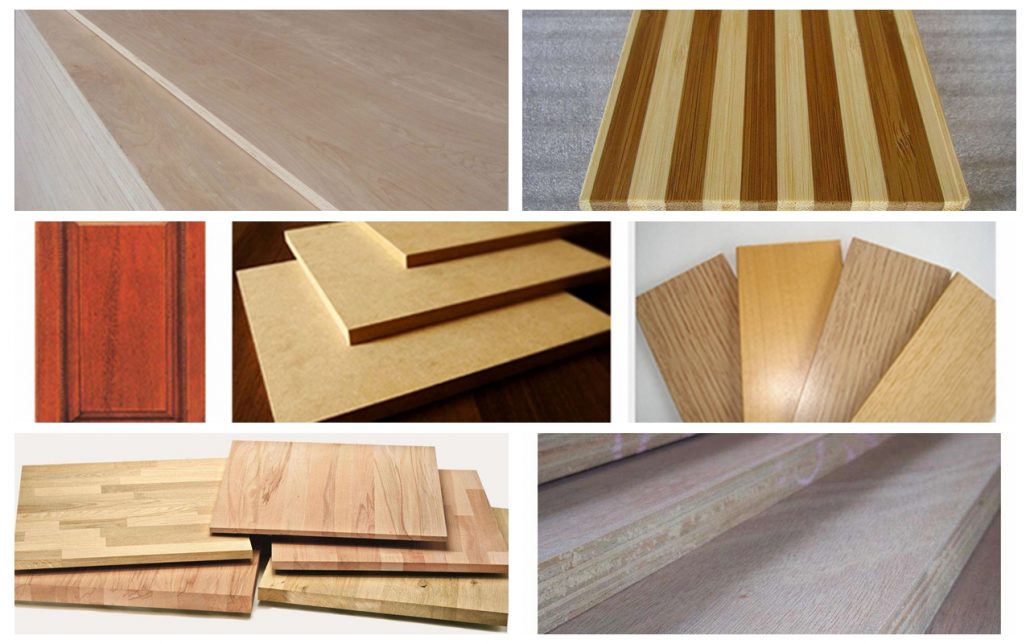
Wood sanding machines are widely used for:
- Solid wood furniture
- Kitchen cabinets
- Wardrobes
- Wooden doors
- MDF panels
- Plywood
- Decorative panels
- Flooring
- Stair components
Types of Sanding Machines for Wood
1. Wide Belt Sanding Machine
A wide belt sanding machine is the most common industrial sanding solution for flat panels.
Suitable for:
- MDF
- Plywood
- Particle board
- Solid wood panels
- Cabinet doors
Advantages
- High production efficiency
- Uniform sanding quality
- Adjustable sanding thickness
- Ideal for large-scale manufacturing
2. Brush Sanding Machine
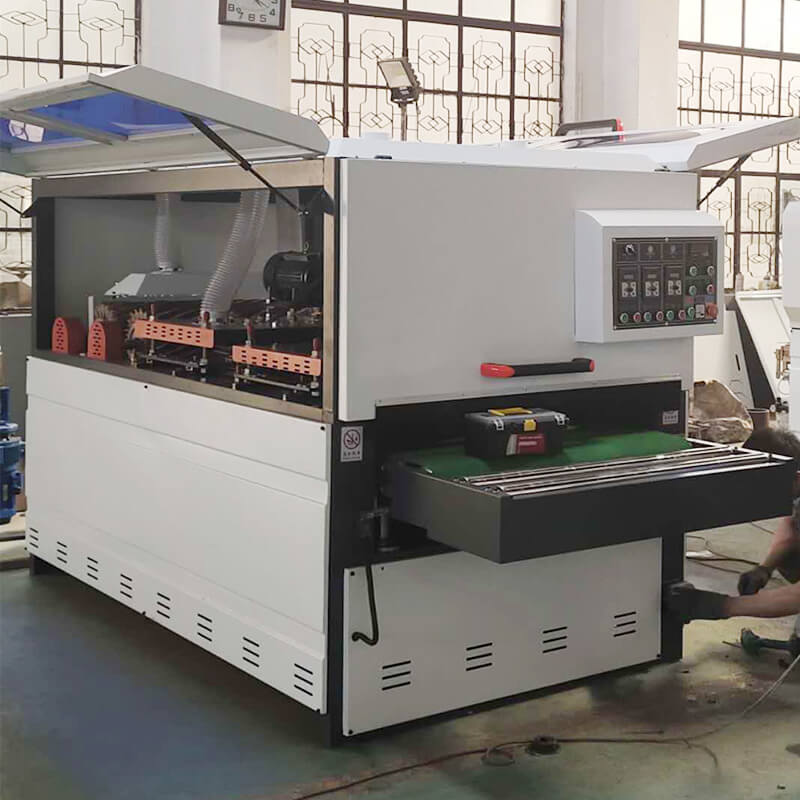
Brush sanding machines use rotating abrasive brushes to sand irregular surfaces and detailed profiles.
Suitable for:
- Raised cabinet doors
- Moldings
- Decorative wood panels
- Carved furniture
- Window frames
The flexible brushes can reach grooves and edges that belt sanders cannot.
3. Drum Sanding Machine
A drum sander uses abrasive paper wrapped around a rotating drum.
Applications include:
- Tabletops
- Cutting boards
- Solid wood panels
- Thin wooden sheets
It provides accurate thickness control and smooth finishing.
4. Disc Sanding Machine
Disc sanders are commonly used for:
- Small wood parts
- Edge finishing
- Curved components
- Craft products
They are ideal for woodworking shops and custom furniture manufacturers.
5. Edge Sanding Machine
Designed specifically for sanding:
- Panel edges
- Cabinet components
- Door frames
- Wood strips
Edge sanders improve edge quality before edge banding or painting.
6. Profile Sanding Machine
Profile sanders are used for complex shapes such as:
- Crown molding
- Decorative trim
- Stair railings
- Furniture legs
- Wooden frames
These machines ensure consistent sanding of contoured surfaces.
Wood Sanding Machine Features & Advantages
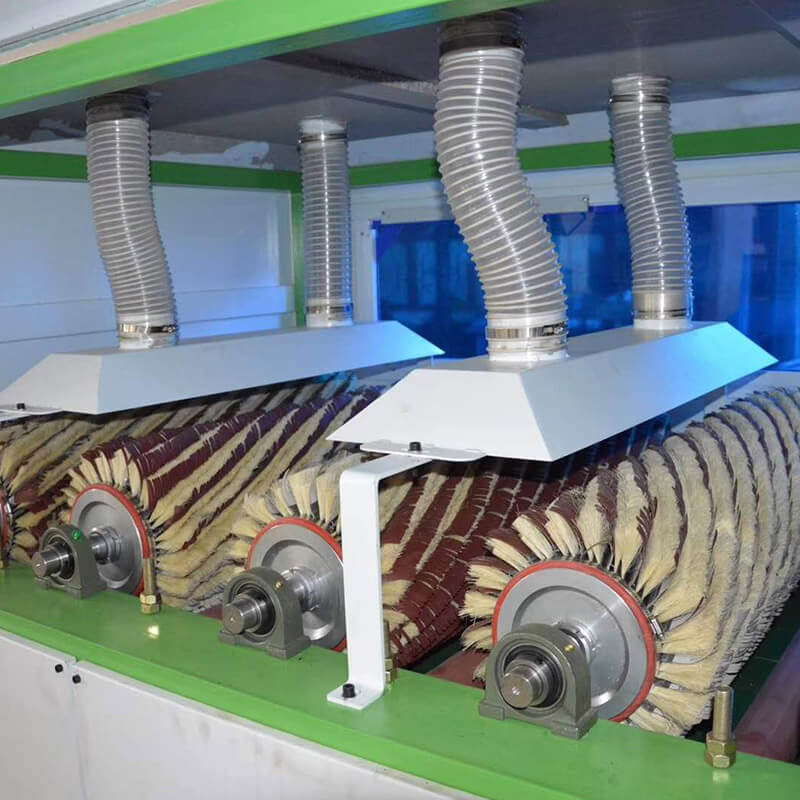
1. The machine structure design is reasonable, simple and beautiful, which adopts top brand laser cutting process, the workpiece first pickling rust, dry powder heating uniform coating.
2. The speed of feeding and thickness of the sanding machine can be sufficiently adjustable.
3. Reasonable design: independent operation of the cabinet, convenient usage and maintenance.
4. The CNC machine has thickness adjustment function, which can achieve rapid positioning of the thickness of plate, both accurate production, but also greatly improve production efficiency.
5. The sanding machine with high quality and stability is easy to control.
6. The CNC machine will take the place of traditional handicraft sanding and it can implement polishing on both top and bottom sides, which has greatly improved the production efficiency.
7. The products that are polished by the CNC machine have a good flatness on the surface, preparing well for the next coating.
4S: Horizontal spiral roller*2pcs + Disc sanding roller*2pcs.
Applications of Wood Sanding Machines
Furniture Manufacturing
Industrial sanding machines are essential for producing:
- Dining tables
- Chairs
- Cabinets
- Wardrobes
- Office furniture
- Bathroom vanities
They prepare surfaces for painting, staining, or veneer application.
Kitchen Cabinet Production
Sanding machines process:
- Cabinet doors
- Side panels
- Shelves
- Drawer fronts
A smooth surface ensures better paint adhesion and a premium finish.
Wooden Door Manufacturing
Applications include:
- Solid wood doors
- MDF doors
- Veneer doors
- Decorative door panels
Brush sanders are particularly effective for raised and profiled door designs.
Flooring Production
Wood sanding machines finish:
- Hardwood flooring
- Engineered flooring
- Bamboo flooring
They create uniform thickness and a smooth surface ready for coating.
Decorative Panel Manufacturing
Suitable for:
- Wall panels
- Ceiling panels
- Acoustic panels
- Decorative MDF boards
Materials That Can Be Sanded
Industrial sanding machines can process:
- Solid wood
- MDF
- Plywood
- Particle board
- Melamine panels
- Veneered panels
- Bamboo
- Cork
- Composite wood materials
How to Choose the Right Wood Sanding Machine
When selecting a sanding machine, consider:
Material Type
Different materials require different sanding methods. Solid wood, MDF, and veneered panels may use different abrasive belts or brush configurations.
Workpiece Size
Choose a machine with a working width suitable for your production needs, such as 630 mm, 1000 mm, or 1300 mm.
Surface Shape
- Flat panels → Wide belt sander
- Profiled surfaces → Brush sander
- Curved components → Profile sander
- Edges → Edge sander
Production Volume
High-volume furniture factories benefit from fully automatic sanding lines with conveyors and dust extraction systems.
Integrating Sanding Machines into a Furniture Production Line
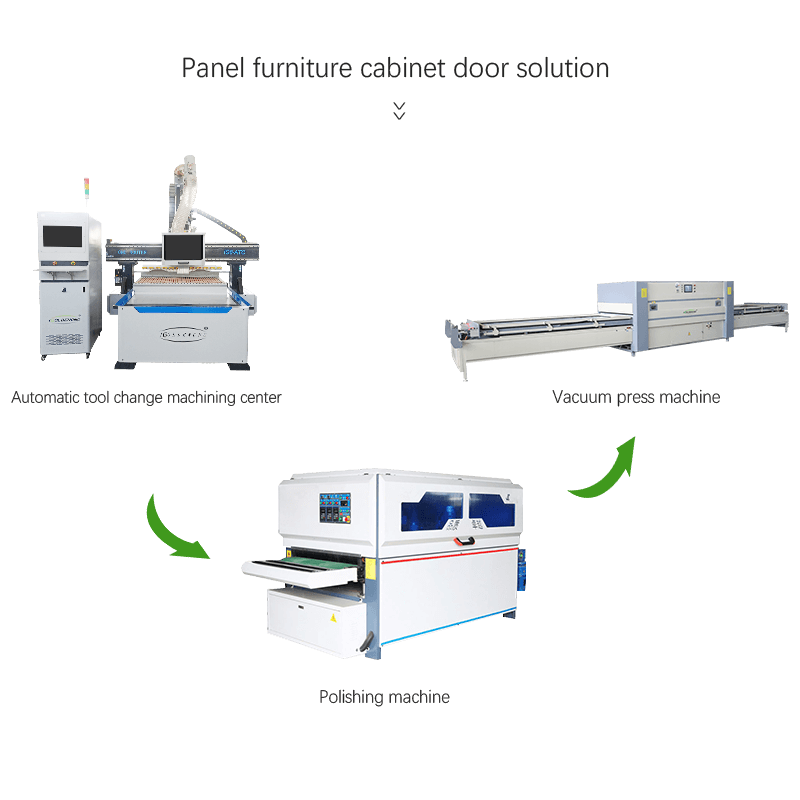
A wood sanding machine can be integrated with:
- CNC nesting machines
- Edge banding machines
- CNC drilling machines
- Automatic spray painting lines
- Conveyors
- Robotic loading and unloading systems
This creates a highly efficient, automated furniture manufacturing process.
Frequently Asked Questions (FAQ)
What is the best sanding machine for wood?
A wide belt sanding machine is the best choice for sanding flat wood panels such as MDF, plywood, and solid wood boards, while brush sanding machines are ideal for profiled and carved surfaces.
Can sanding machines process MDF?
Yes. Most industrial wood sanding machines are designed to sand MDF, plywood, particle board, melamine panels, and solid wood with excellent consistency.
What grit should I use?
Coarse grits (40–80) are used for material removal, medium grits (100–150) for surface preparation, and fine grits (180–320) for finishing before painting or coating.
Do wood sanding machines require a dust collection system?
Yes. A dust extraction system helps maintain a clean working environment, improves sanding quality, and extends abrasive belt life.
Can sanding machines be integrated into an automated production line?
Yes. Modern sanding machines can be connected with CNC routers, edge banders, drilling machines, conveyors, and finishing systems to create a complete automated woodworking production line.
IGOLDEN BLOG
Thank you for visiting the iGOLDENCNC website. iGOLDENCNC is the professional supplier of CNC machinery application solution, within the business of producing and selling CNC machinery and accessories.