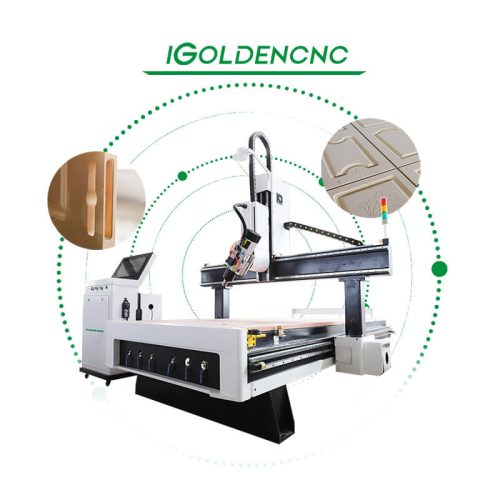
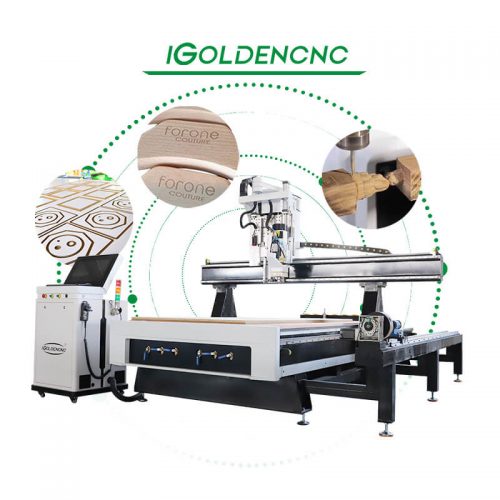
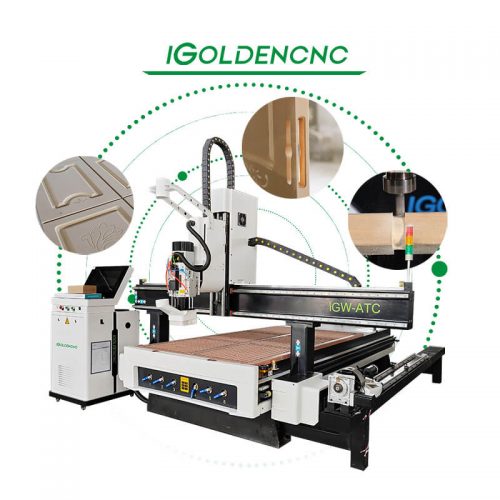
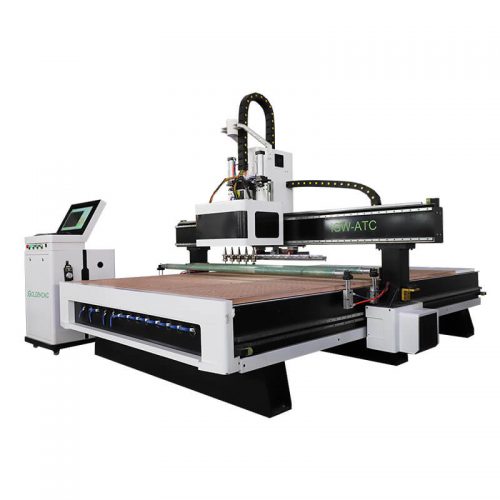
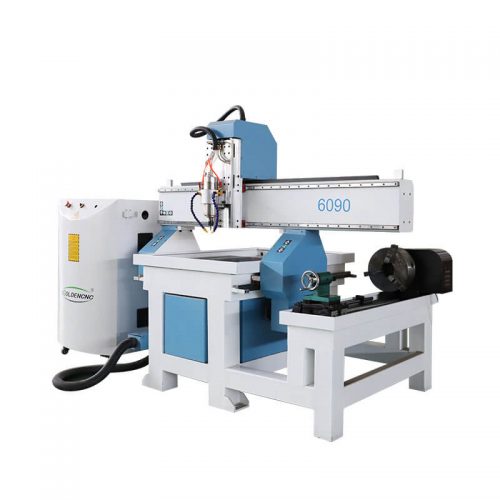
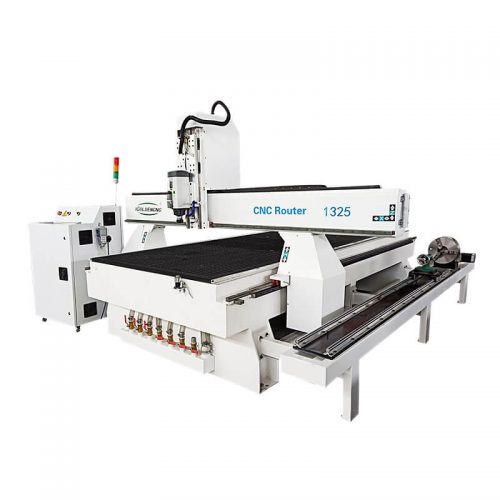
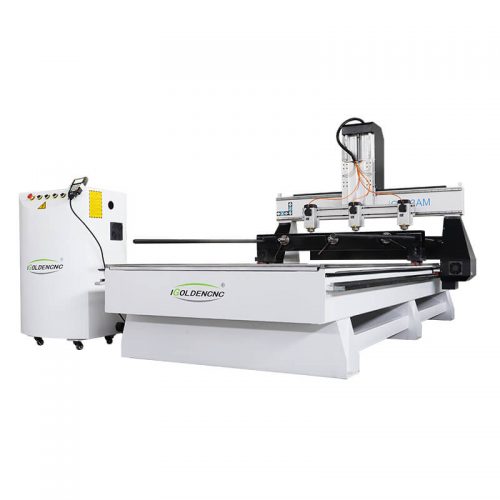
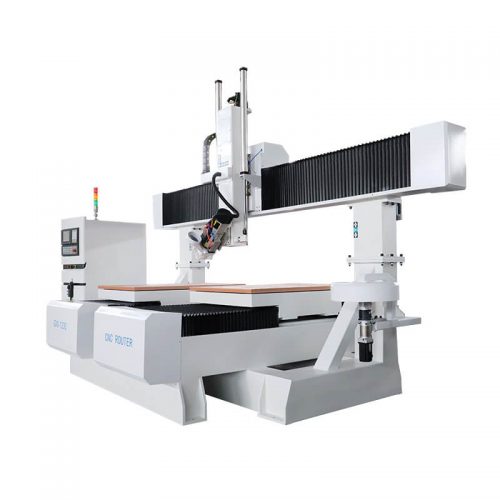
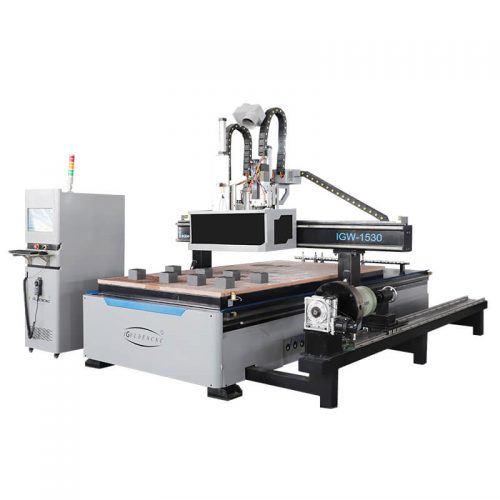
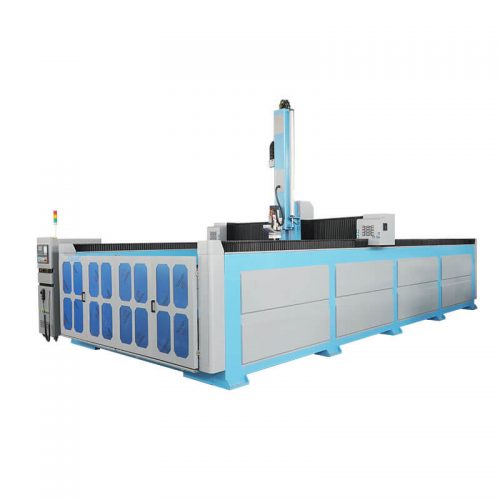
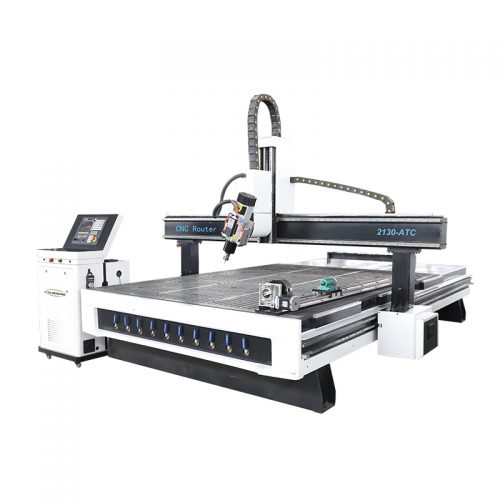
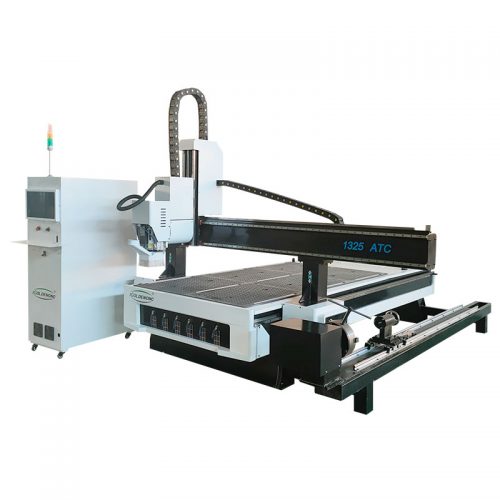
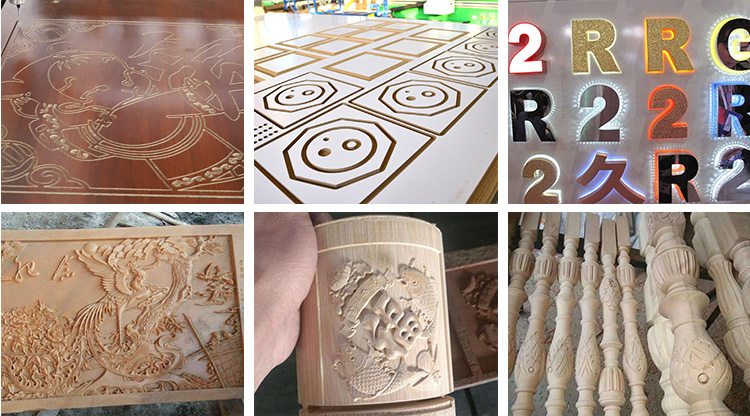
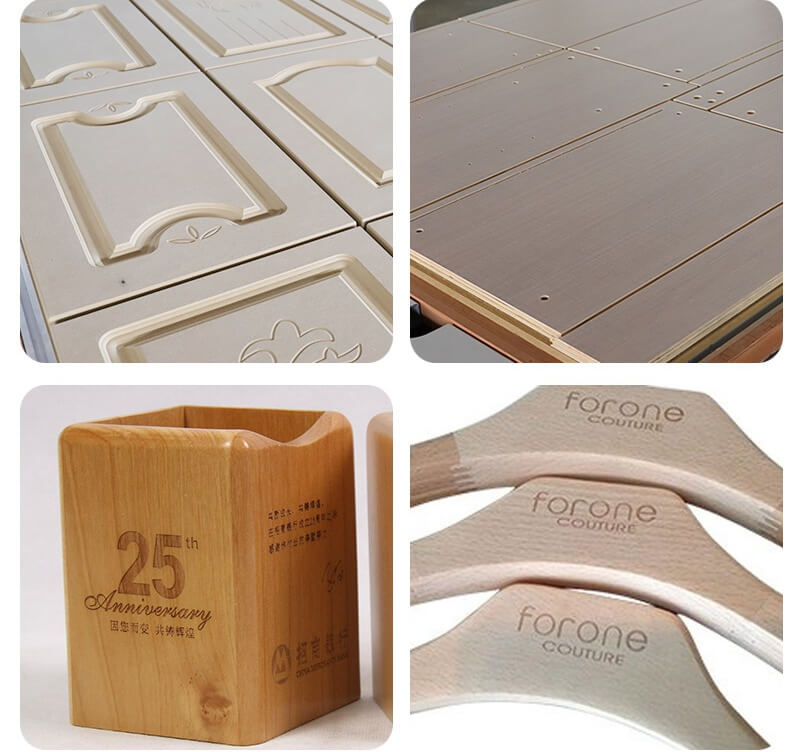
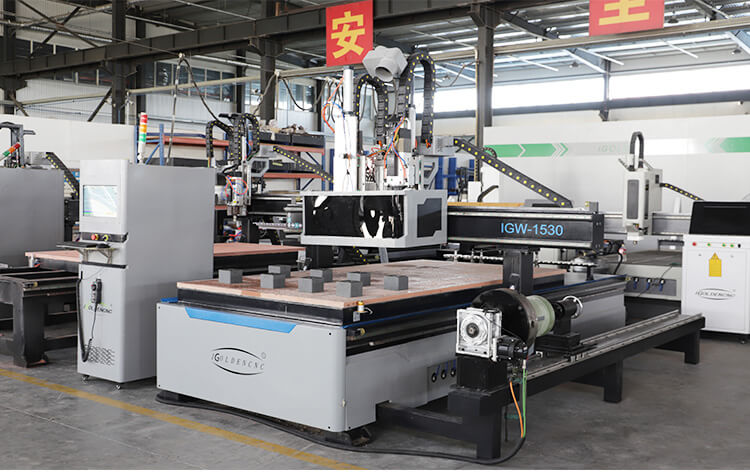
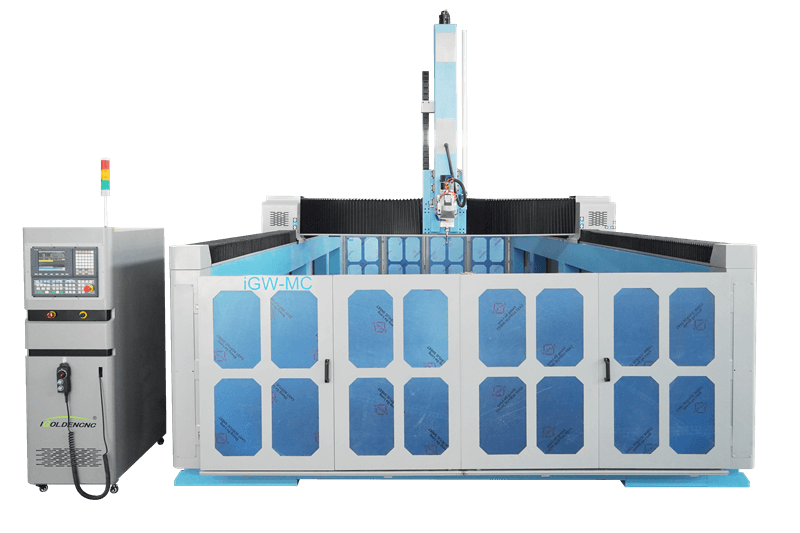
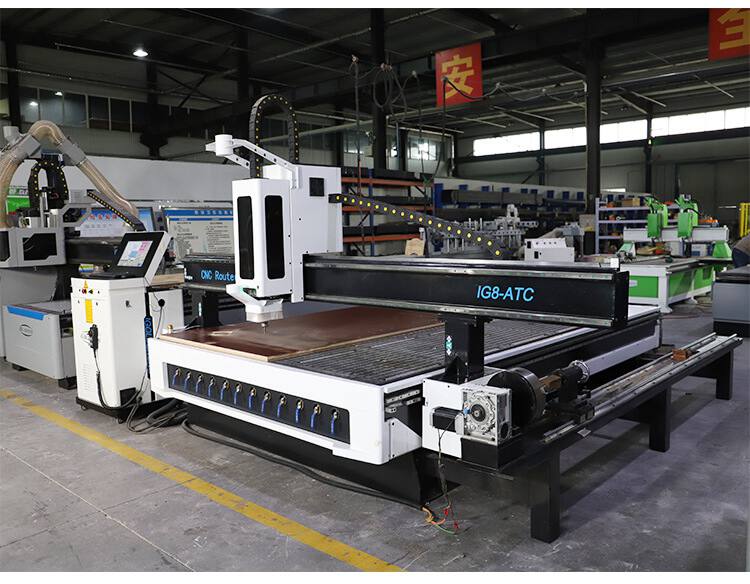
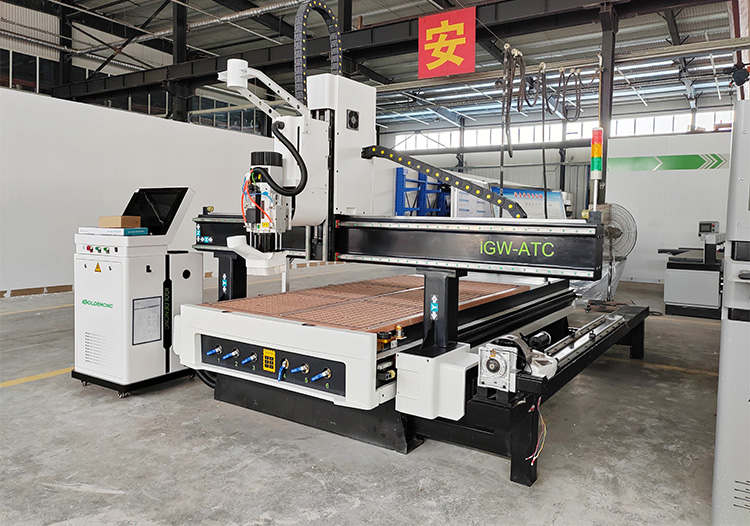
A 4 Axis CNC Wood Router is a powerful and versatile machine designed for advanced woodworking applications. Compared with traditional 3-axis CNC routers, this machine includes an additional rotary axis (A-axis), allowing it to process cylindrical and curved surfaces with high precision.
This makes it ideal for producing complex 3D designs such as table legs, chair legs, wooden columns, sculptures, and decorative furniture components.
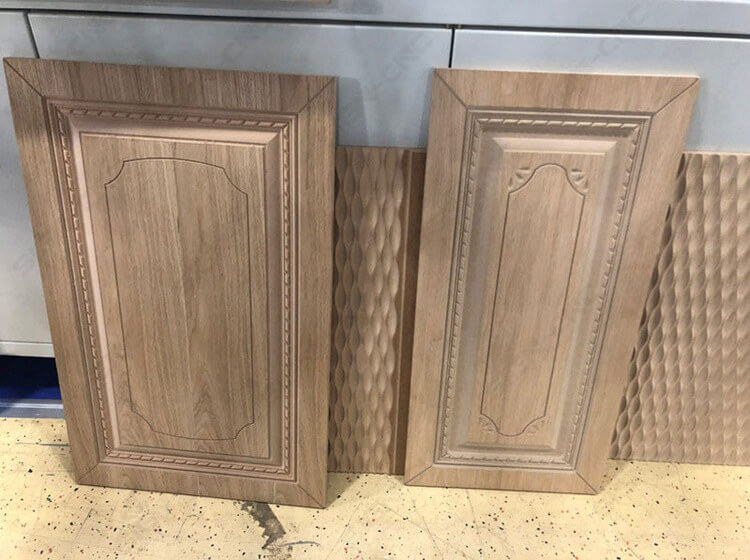
The machine is widely used in industries such as furniture manufacturing, wood door production, interior decoration, and artistic carving.
A 4 Axis CNC wood router is an advanced woodworking machine equipped with a rotary axis, enabling precise 3D carving, cylindrical engraving, and complex surface machining on materials such as wood, MDF, plywood, and composite panels.Perfect for woodworking, furniture, cabinet making, signage, aluminum, acrylic, plastics, and metal fabrication, it delivers precise cutting, drilling, and milling.These machines enhance efficiency, reduce setup time, and support both custom projects and industrial production with high accuracy and optional automatic tool changers.
This wooden hole machine is mainly used to solve the problem that the CNC discharging machine cannot punch or bore side holes, and the accuracy of ordinary pneumatic drills is not high. In addition, it is rid of repeated positioning. Wood drilling machines have two types: semi-automatic wood drilling machines and fully automatic wood drilling machines. With the development of society, the drilling technology of automatic drilling machines has improved, and the application has become more extensive.
Applications of 4 Axis CNC Router
The 4 Axis CNC Router is widely used across woodworking, metalworking, and composite fabrication industries:
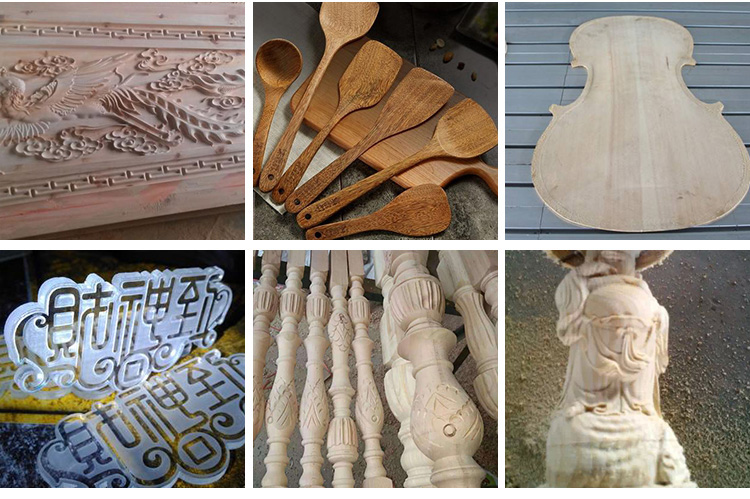
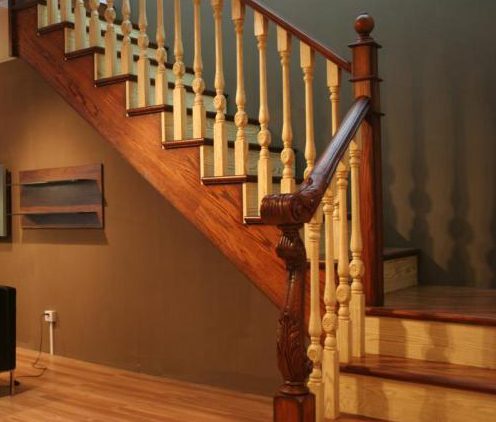
• Furniture & Cabinet Making: Wooden doors, panels, office furniture, stair balusters, table legs, solid wood cabinets, and decorative cuttings.
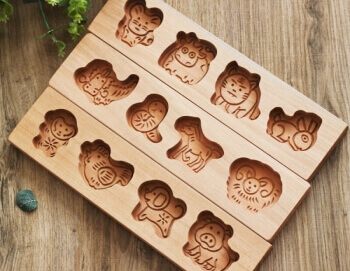
• Woodworking & Carpentry: Relief sculpture, Pierced work, musical instruments, gaming cabinets, computer desks, and custom wood projects.
• Signage & Advertising: Acrylic and PVC cutting, logo production, signage boards, lightbox molds, and plastic decorative panels.
• Metal & Composite Fabrication: Aluminum sheets, aluminum plastic panels, honeycomb panels, copper, stainless steel, and other metal parts.
• 3D Cutting & Prototyping: Sculptures, statues, 3D architectural models, automotive and aerospace components, specialty molds, and industrial prototypes.
• Panel Processing & Specialty Materials: MDF, plywood, epoxy resin, ABS, PP, PE, artificial stone, foam, and composite sheets.
• 360° Rotary Axis Machining: Enables simultaneous 4 axis processing for complex cylindrical and multi-surface parts.
• High Precision & Efficiency: Achieves ±0.02mm accuracy with industrial-grade spindles (7.5–15HP).
• Automatic Tool Changer (Optional): Reduces setup time and increases production efficiency.
• Versatile Material Compatibility: Wood, MDF, plywood, acrylic, plastics, aluminum, copper, stainless steel, foam, and composites.
• Customizable CNC Controllers: Support Mach3, Mach4, OSAI, Siemens, FANUC, and other professional CNC systems.
• Advanced Programming Features: A/C code and M code support, intelligent memory function, breakpoint continuation, and parameter backup/recovery.
• Professional 3D Capability: Perfect for 3D wood, stone cuttings, furniture components, stair pillars, and complex industrial parts.
• Durable & Reliable: Strong anti-interference ability and compliance with CE and other industrial safety standards.
Contact Us Today to Get Price!
4 Axis CNC Router Machine Price
The cost of a 4 Axis CNC Router, including industrial-grade 4-axis CNC machines for multi-surface milling, depends on table size, spindle power, features, and optional accessories. Entry-level 4-axis CNC routers for hobbyists typically start around $5,000, while advanced industrial CNC routers with automatic tool changers (ATC), high-power spindles, and IoT-ready controllers can cost $38,000 or more. In 2026, the average price of a standard 4-axis CNC router table is approximately $5,680, and full 4-axis CNC milling machines designed for complex woodworking or metalworking start at around $12,000. When choosing a 4-axis CNC machine, consider your material types, production volume, and machining complexity to select the router that best fits your operational needs and budget.
Rotary Fourth Axis (A Axis — Workpiece Rotation)
The rotary fourth axis is a servo-driven chuck and tailstock assembly mounted on the machine table, aligned parallel to the X axis. It grips a cylindrical or near-cylindrical workpiece — a turning blank, a solid wood dowel, a prepared square stock piece — and rotates it around its long axis under CNC control while the router bit moves in X, Y, and Z simultaneously. The combination of workpiece rotation (A axis) and linear tool motion (X, Y, Z) allows the router bit to carve profiles, flutes, spirals, and decorative patterns around the full circumference of the rotating workpiece — producing chair legs, table pedestals, decorative balusters, twisted columns, newel posts, and any other furniture or architectural component with a round or complex cross-section that requires routing on multiple faces.
Swing Head Fourth Axis (A Axis — Spindle Tilt)
The swing head fourth axis tilts the spindle itself — rotating the cutting head from vertical to angled positions across a defined range, typically 0° to 90° or beyond. Rather than rotating the workpiece, the swing head changes the angular approach of the cutting tool relative to a flat workpiece that remains stationary on the table. This configuration is the right tool for beveled edge cutting, angled profile routing, compound miter face machining, V-groove work at compound angles, and any operation where the cut must approach the workpiece at an angle other than straight down — without the complex fixturing that tilting the workpiece manually would require.
The IGOLDENCNC 4 Axis CNC Wood Router is available in both configurations — and in combined configurations where both rotary workpiece capability and swing head tilting are available on the same machine — allowing you to specify the fourth axis type that matches your specific production requirements.
Best Ways to Make Money with a 4 Axis CNC Router
Sign making
Custom furniture production
Wood carving
Cabinet door manufacturing
3D relief carving
Mold making
Foam cutting
Acrylic cutting
Plastic parts production
Metal engraving (soft metals)
Jewelry model prototyping
Musical instrument crafting
Interior decoration panels
Exterior wall cladding
Custom nameplates
Trophy and award engraving
Kitchen cabinet production
Advertising board production
Wooden toy making
Prototyping for product design
CNC art pieces
Door frame carving
Custom gift boxes
Architectural model making
Custom branding on products
The Four Axes Explained — What Each One Does
Understanding precisely what each axis contributes to the IGOLDENCNC 4 Axis system's capability grounds the specification in the practical reality of woodworking production.
X Axis — Gantry Travel
The X axis drives the gantry along the length of the machine table — the primary linear axis for long cuts and the axis that drives the router bit along the length of a rotating workpiece in rotary carving applications. In rotary axis operation, X axis motion advance combined with A axis rotation produces the helical toolpath geometry that creates spiral fluting, twisted column profiles, and wrapped decorative patterns. X axis travel range determines the maximum workpiece or panel length the machine can process — on the IGOLDENCNC standard 4'×8' configuration, X axis travel covers 2,440mm with working clearance at both ends.
Y Axis — Spindle Traverse
The Y axis moves the spindle assembly across the gantry beam — traversing the router bit laterally across the workpiece. In rotary axis applications, Y axis positioning determines the lateral offset of the router bit from the rotary axis centerline — controlling the effective diameter of the carved feature at any given A axis and X axis position. For profiles that transition from a larger to smaller diameter along the workpiece length, the CAM program coordinates Y axis motion with X and A axis motion simultaneously to produce the programmed diameter transition.
Z Axis — Spindle Height
The Z axis controls the vertical position of the router bit — setting cut depth for all operations and providing the clearance height for rapid moves between cut paths. In rotary axis operation, Z axis position combined with Y axis position determines the effective depth of cut into the rotating workpiece at each point in the program. The Z axis also manages the transition between operations on a combined 4 axis machine — raising to clear height between a rotary carving pass and a subsequent flat-surface drilling operation without manual intervention.
A Axis — The Fourth Axis (Rotary or Swing Head)
The A axis is the defining additional capability of the 4 axis configuration — and its practical contribution depends on whether the fourth axis is a rotary workpiece unit or a swing head spindle tilt.
As a rotary axis, the A axis rotates the workpiece continuously under servo control while the X, Y, and Z axes move simultaneously — enabling the router bit to carve any profile around the full 360° circumference of the rotating workpiece. Spiral flutes require coordinated X advance and A rotation. Faceted profiles require A-axis indexing to each face position. Eccentric cams require Y-axis offsetting synchronized with A-axis rotation. The full range of classical and contemporary turned furniture profiles is accessible through different combinations of coordinated X, Y, Z, and A motion.
As a swing head axis, the A axis tilts the spindle from vertical to the programmed cut angle — enabling beveled edge cuts, angled profile routing, compound miter faces, and V-groove work at any angle within the swing range without workpiece repositioning. Fixed-angle operations lock the A axis at the programmed tilt before cutting begins. Continuously changing angle operations — curved beveled profiles and compound angle transitions — interpolate all four axes simultaneously for smooth angular transitions along the cut path.
A 3 axis CNC wood router moves its cutting tool in three linear directions — X (length), Y (width), and Z (height) — while the spindle always points vertically downward. This is entirely sufficient for flat panel cutting, pocketing, profiling, and engraving. A 4 axis router adds a fourth independent axis — either a rotary unit that rotates cylindrical workpieces to expose all faces to the cutter, or a swing head that tilts the spindle to angled positions for bevel and miter cutting. The fourth axis enables woodworking operations that a 3 axis machine geometrically cannot perform: carving chair legs and balusters, producing spiral fluted columns, routing beveled edges without tilting the workpiece, and machining angled joinery faces — all in a single CNC platform.
A 4 Axis CNC Router uses X, Y, Z linear axes plus one rotary axis (A/B/C), which can move independently or in linkage with the other axes. This setup allows simultaneous 4-axis interpolation for complex cylindrical, relief, or multi-surface parts. Some 4-axis machines may only index the rotary axis, which is suitable for simpler projects.
A 5 Axis CNC Router adds an additional rotary axis, giving three linear axes and two rotating axes. This enables full 5-axis linkage, allowing simultaneous movement of all axes for machining highly complex curved surfaces, non-standard 3D parts, and intricate aerospace, automotive, or medical components.
Key Advantages of 5 Axis over 4 Axis:
• Capable of machining intricate, multi-sided 3D surfaces in one setup.
• Eliminates multiple clamping and repositioning steps, reducing errors.
• Essential for high-precision industries such as aerospace, medical equipment, and automotive prototyping.
• Handles advanced geometries that are impossible with 4-axis machines alone.
For production turning of consistent profiles — chair legs, table pedestals, and standard architectural balusters — the IGOLDENCNC 4 axis rotary configuration replaces the wood lathe with superior dimensional consistency, faster cycle time on production runs, and the ability to machine non-round profiles (faceted columns, fluted pilasters, and carved panel sections) that a lathe cannot produce. For freeform artistic turning where the craftsperson develops the profile interactively while the workpiece is spinning — a skill-based creative process — the lathe remains the appropriate tool. Most production furniture operations find that the IGOLDENCNC 4 axis system handles 80–90% of their cylindrical component requirements more productively than lathe turning, while retaining lathe capability for the remaining artistic and irregular work.
The 4 axis rotary configuration is most suited to: chair legs, table pedestals and bases, decorative balusters and newel posts, twisted and spiral columns, furniture knobs and pulls, carved architectural elements, and any component with a round or near-round cross-section requiring decoration or profiling on multiple faces. The 4 axis swing head configuration is most suited to: beveled cabinet door edges, angled furniture joint preparation, chamfered architectural panel edges, V-groove lettering and signage at compound angles, miter face preparation for frame and panel assemblies, and sloped surface routing on ergonomic furniture forms.