
Foam machining with CNC routers has become an indispensable process in various industries, offering precise and efficient solutions for cutting, shaping, and creating foam-based products. From packaging and signage to prototyping and model making, CNC routers provide the accuracy and flexibility needed to work with foam materials, which can be challenging to machine due to their lightweight and unique physical properties. Whether you’re crafting intricate 3D signage, custom packaging inserts, or large-scale theatrical props, understanding the right tools, speeds, and techniques helps achieve high-quality results.
CNC Foam Machining
CNC Foam Machining is a computer-controlled manufacturing process used to cut, mill, carve, shape, and engrave foam materials into complex 2D and 3D products. With high precision, fast production speeds, and excellent repeatability, CNC foam machining has become an essential technology in industries such as aerospace, automotive, architecture, sculpture, mold making, packaging, marine, and advertising.
Whether you are producing large-scale architectural models, EPS molds, prototype parts, or artistic sculptures, CNC foam machining provides an efficient and cost-effective solution.
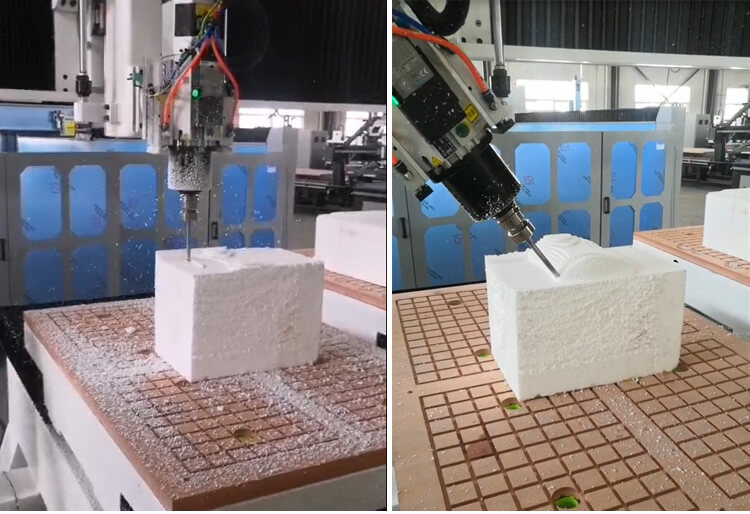
CNC foam machining uses a CNC router or CNC milling machine to remove material from a foam block according to a digital CAD/CAM design. The machine automatically follows programmed toolpaths to create highly accurate shapes and intricate details.
Unlike manual cutting methods, CNC foam machining offers:
- Higher precision
- Faster production
- Better repeatability
- Reduced material waste
- Complex 3D machining capabilities
Industries Using CNC Foam Machining
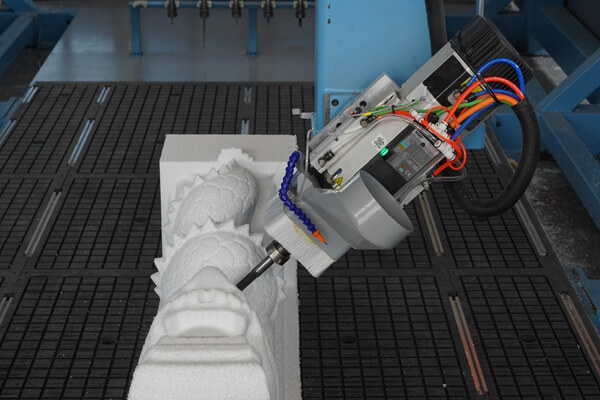
Mold Making Industry
Foam machining is extensively used for:
- Foundry molds
- Composite molds
- Fiberglass molds
- Vacuum forming molds
Benefits:
- Rapid mold production
- Lower costs compared to metal molds
- Easy design modifications
Automotive Industry
Applications include:
- Concept vehicle models
- Interior trim prototypes
- Tooling patterns
- Aerodynamic testing models
Automotive manufacturers rely on CNC foam machining for fast product development cycles.
Aerospace Industry
Used for:
- Prototype components
- Composite tooling
- Wind tunnel models
- Lightweight structures
Precision and repeatability are critical in aerospace applications.
Architecture & Construction
Applications:
- Architectural models
- Decorative columns
- Cornices
- Building ornaments
Foam is often coated after machining to create durable architectural elements.
Types of Foam Used in CNC Machining
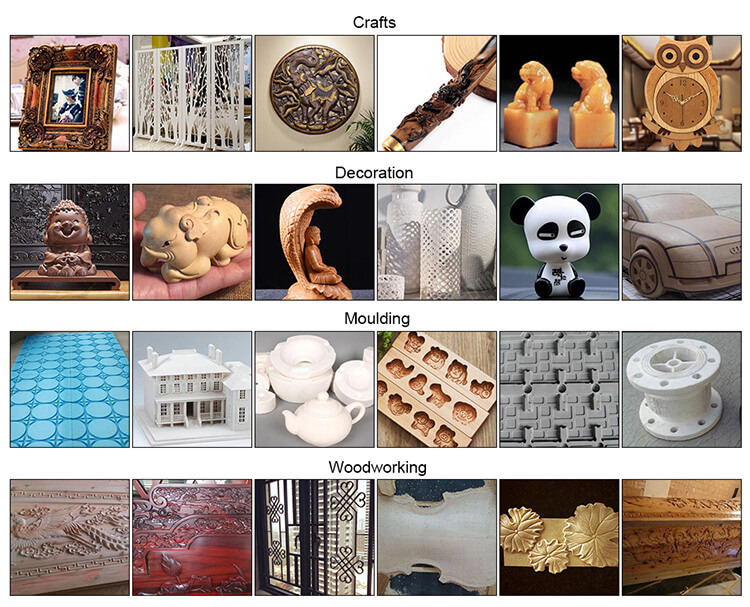
The choice of foam material for CNC machining depends largely on the specific application and the physical properties required for the project. While polyurethane and polystyrene foam are commonly used due to their versatility and ease of machining, expanded polystyrene (EPS) and other specialized foams like polyethylene, polypropylene, and memory foam offer unique advantages for particular industries and applications. By understanding the characteristics of each foam type, operators can optimize CNC machining processes to achieve precise, high-quality results tailored to the material’s strengths and limitations.
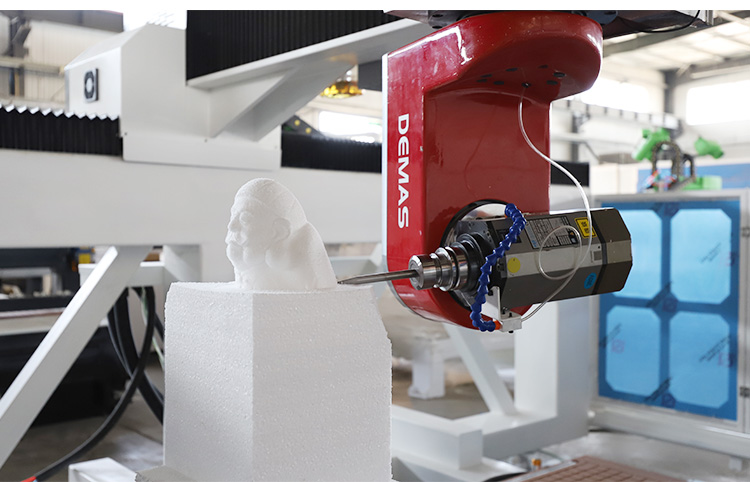
Advantages of CNC Foam Machining
High Precision
Modern CNC machines can achieve:
- Accurate dimensions
- Consistent quality
- Fine detail reproduction
Fast Production
Foam materials are relatively easy to machine, allowing:
- High feed rates
- Rapid prototyping
- Reduced production cycles
Complex 3D Shapes
CNC machining can produce:
- Curved surfaces
- Organic shapes
- Deep cavities
- Detailed sculptures
Cost-Effective Manufacturing
Benefits include:
- Reduced labor costs
- Minimal material waste
- Lower tooling expenses
Excellent Surface Quality
Especially with high-density foam materials, smooth finishes can be achieved directly from the machine.
Speeds and Feeds for Foam Machining
The specific speeds and feeds depend on a variety of factors, including the foam material, tool type, and desired machining outcome. Below are general guidelines to help operators adjust their settings for different foam materials and achieve optimal machining performance.
- Spindle Speed (RPM): Typically measured in revolutions per minute (RPM). For softer foams like EPS and polystyrene, spindle speeds between 12,000 to 18,000 RPM are often recommended. Higher spindle speeds help to prevent heat buildup and allow the tool to cut through the foam efficiently. For denser foams such as polyurethane, slower spindle speeds (between 8,000 to 12,000 RPM) may be required to prevent overheating and excessive wear on the tool.
- Feed Rate (IPM): Measured in inches per minute (IPM), determines how fast the tool moves through the material. A higher feed rate removes material more quickly but can lead to rougher cuts if the tool isn’t sharp enough or the material isn’t properly supported. For softer foams like EPS and polystyrene, feed rates between 60–100 IPM are common, as these materials are easier to cut and don’t require as much force to penetrate. For denser foams like rigid polyurethane, a slower feed rate of about 30–60 IPM is typically recommended to ensure smoother cuts and to avoid stressing the tool or foam material too much.
- Depth of Cut: Refers to how deep the tool penetrates the foam with each pass. A shallower depth of cut is usually preferred to reduce heat generation and ensure cleaner, more accurate cuts. 0.05 to 0.1 inches per pass is a typical range for softer foams, while slightly deeper cuts may be used for denser materials, depending on the material’s rigidity.
FAQ
What foam materials can CNC machines process?
CNC machines can process EPS, XPS, PU foam, EVA foam, and other high-density foam materials.
Is CNC foam machining suitable for large sculptures?
Yes. Large-format CNC routers are widely used to create sculptures, props, and architectural decorations.
What is the best CNC machine for foam molds?
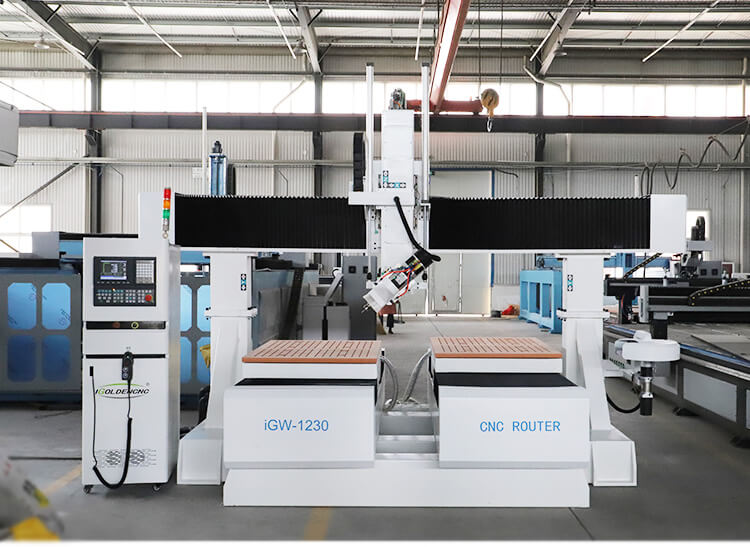
For most mold-making applications, a 4-axis or 5-axis CNC machine provides the best combination of speed, precision, and flexibility.
Does foam machining create a lot of dust?
Yes. Dust collection systems are recommended to maintain a clean working environment and protect machine components.
Can CNC foam machining be used for rapid prototyping?
Absolutely. Foam machining is one of the fastest and most cost-effective methods for creating prototypes and design models.
IGOLDEN BLOG
Thank you for visiting the iGOLDENCNC website. iGOLDENCNC is the professional supplier of CNC machinery application solution, within the business of producing and selling CNC machinery and accessories.