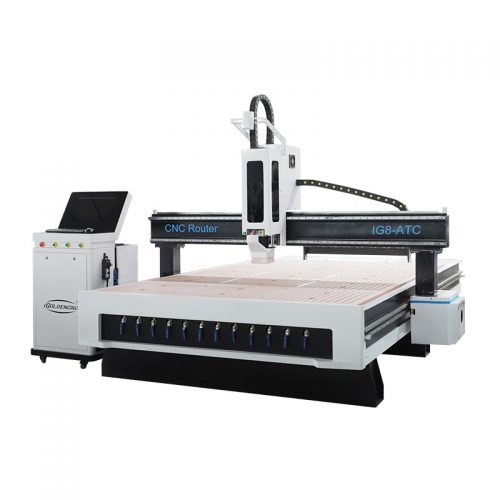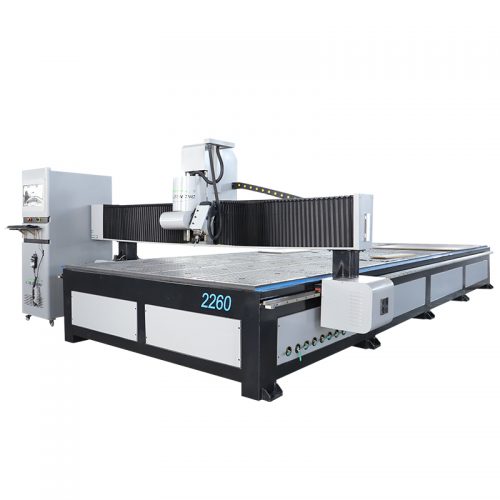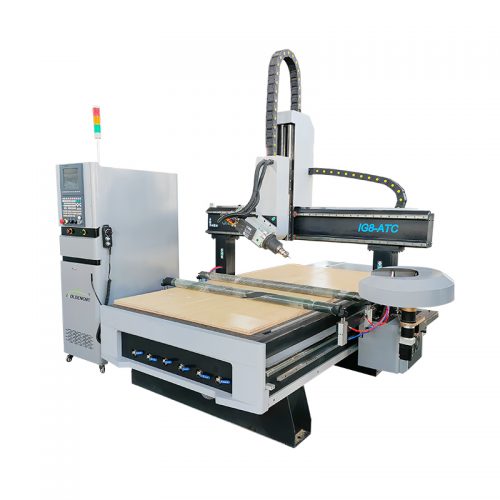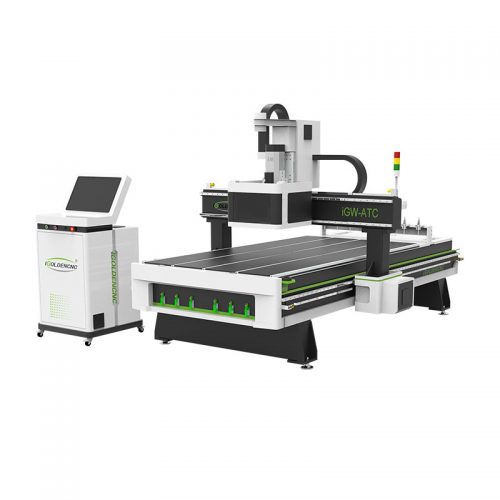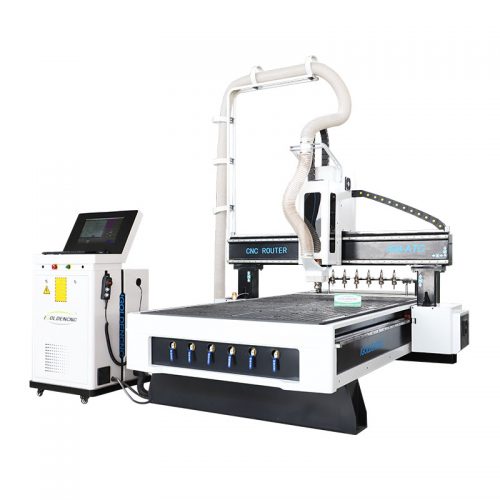

ATC CNC Router with Angle Head and Rotation Axis
The iGW-ATC-1325 ATC CNC Router provides an integrated solution for manufacturers who need flexible machining capabilities for furniture components, wooden columns, decorative products, and customized woodworking parts.
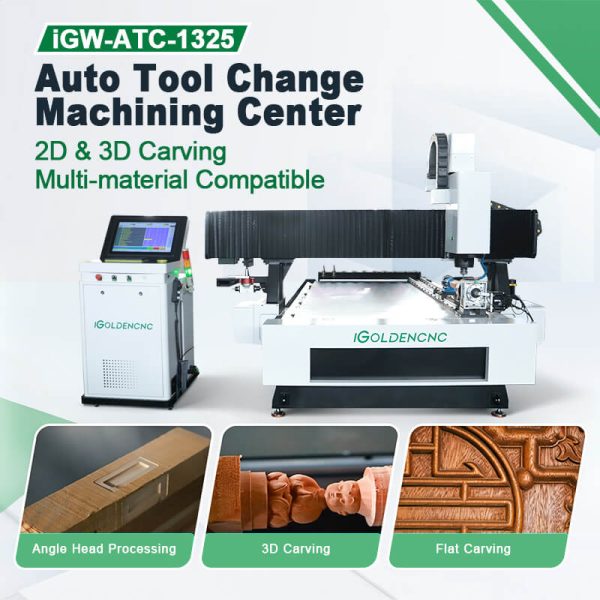
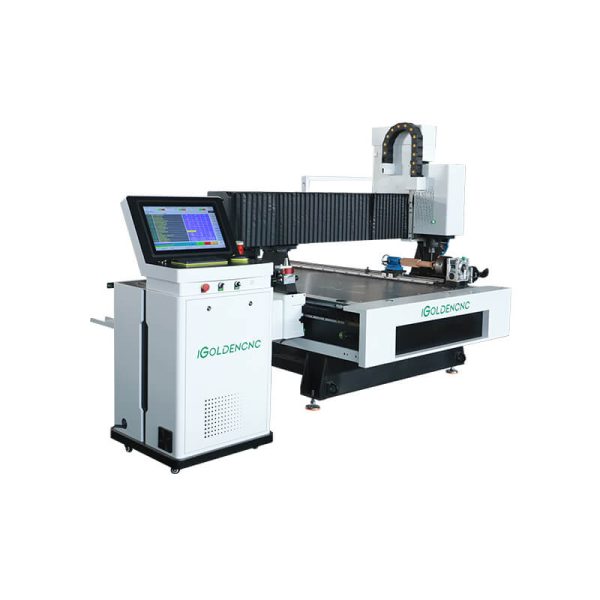
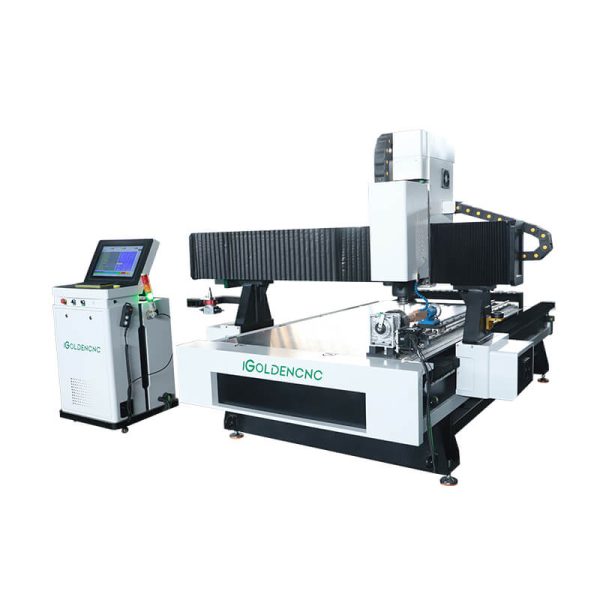
ATC CNC Router with Angle Head & 4th Axis Rotary
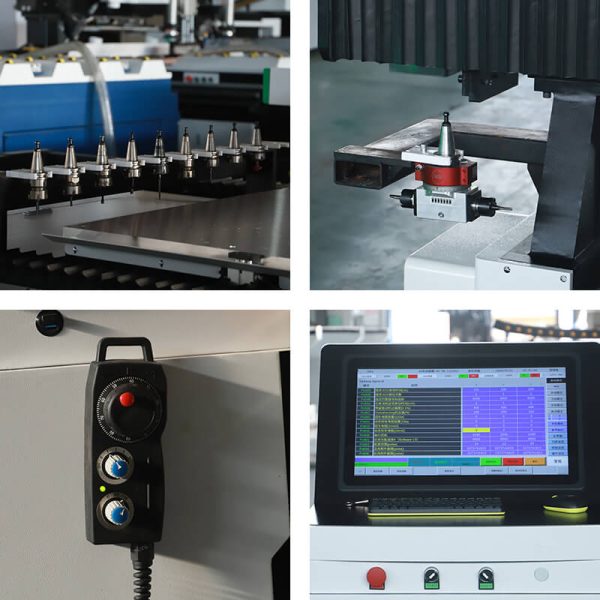
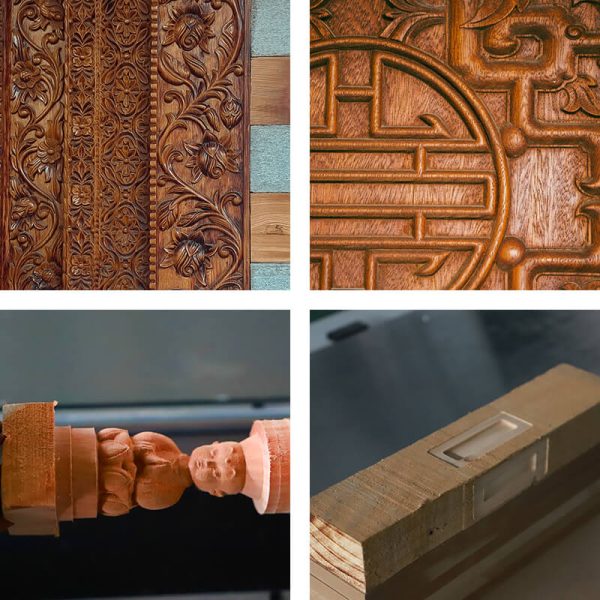
The iGW-ATC-1325 combines three machining capabilities on one 1300 × 2500 mm bed: a 9 kW ATC spindle for face milling and drilling, a C-axis head with 90° angle head for the four sides and end faces, and a servo rotary axis for cylindrical and turned parts. Standard ATC tool change allows the angle head to be stored in the magazine and called by the program, so switching between face work and side work does not require manual mounting or re-zeroing.
The C axis rotates the spindle head around the vertical axis and locks at the commanded angle. Side holes, mortises and edge grooves can therefore be machined at 0°, 90°, 180° and 270°, and at intermediate angles, without a wedge or an angled fixture. Every feature is referenced to the same fixture and the same machine zero, which keeps side bores and face cuts in the correct relative position.
Video
ATC CNC Router with Angle Head Technical Specifications
|
Model |
iGW-ATC-1325 |
|
Spindle |
HQD 9.0kw Air Cooling ATC Spindle+C axis +Angle Head |
|
Rotary Axis |
Yes |
|
Max. Running Speed |
50000mm/min |
|
Max. Working Speed |
30000mm/min |
|
Repositioning Accuracy |
0.02mm |
|
Gantry |
Steel Structure |
|
Worktable |
25mm aluminum plate countertop |
|
Guide Rails |
Taiwan HIWIN |
|
Ball Screw |
Taiwan TBI |
|
Driver |
Yaskawa Drive and Servo Motor |
|
Reducer |
Japan SHIMPO |
|
Frequency Converter |
Taiwan Fuling |
|
Electrical Components |
France SCHNEIDER |
|
Control System |
Syntec |
|
Working Voltage |
380V/50Hz |
Equipment Introduction


Advantages of a 4-Axis ATC CNC Router
Five Faces in One Setup
The top face is milled and drilled by the ATC spindle, while the C-axis angle head reaches the four sides and the two ends, reducing the number of setups and the datum loss that comes with them.
Faster Changeover Between Jobs
The angle head is stored in the tool magazine as a tool, so face work and side work are completed in a single program. Tool change and C-axis indexing replace manual head mounting and re-alignment.
Consistent Accuracy Across Faces
Servo positioning on all five axes and a single clamping datum keep side holes, end tenons and face profiles in the correct relative position, at a repositioning accuracy of ±0.02 mm.
Lower Skill Requirement
Turned and multi-face parts are produced from a file rather than from hand setups on a lathe and a drill press, which reduces dependence on experienced operators and shortens training time.
Flexible Batch Production
The same machine runs a custom stringer, a batch of chair legs and a door frame order without re-configuration, which suits workshops that mix custom and repeat work.
Applications of the ATC CNC Router
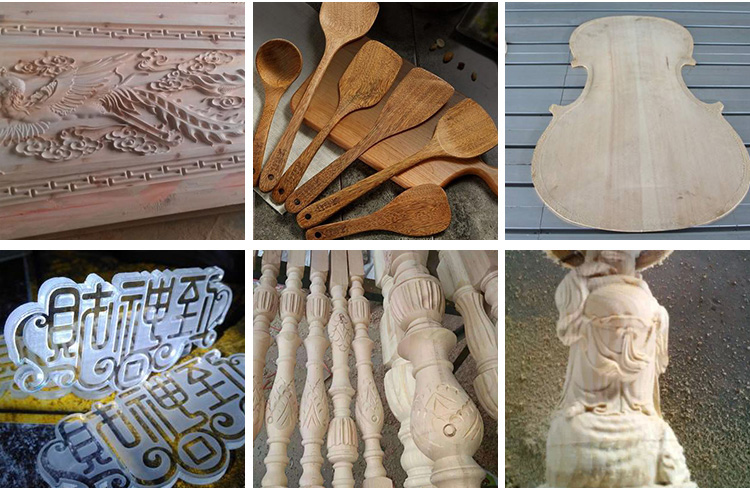
Stair and handrail industry: Stringers, treads, risers, newels and balusters are cut, grooved and side-mortised on one machine, and the turned profiles are completed on the rotary axis without a lathe operation.
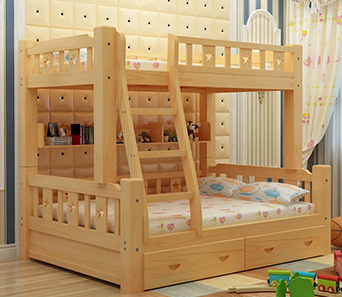
Furniture and seating industry: Chair legs, sofa legs, armrests and frames are machined on five faces, including the side mortises and dowel holes that normally require a separate drilling station.
Door and window industry: Stiles, rails and jambs are profiled, bored for hinges and locks, and grooved for panels in one clamping, with the side features cut by the angle head.
Building decoration and millwork: Columns, wall panels, curved trim, reception counters and display fixtures are processed from the same table, including 3D relief and angled faces.
Musical instrument and specialty wood: Necks, bodies, gunstocks and carved panels are cut as wrapped 3D toolpaths on the rotary axis or as relief work on the flat table.

Frequently Asked Questions About 4-Axis ATC CNC Router
The C axis rotates the spindle head around the vertical axis and locks at the programmed angle, so the 90° angle head can machine the four sides and the end faces of a part at any angle without re-fixturing. It is stored in the tool magazine and called by the program like any other tool.
Solid timber such as oak, beech, walnut, rubberwood and pine, plus MDF, plywood, particleboard, veneered board, acrylic, PVC foam board, carbon-fibre sheet, EPS and PU foam. Aluminium and brass are possible at reduced parameters with suitable tooling.
The rotary axis turns the workpiece itself, so cylindrical parts can be turned and carved around their circumference. The angle head changes the direction of the tool, so the sides and ends of a flat or rectangular part can be machined. They are used together on the same program.
No. It provides five-face access and 4-axis interpolation, with the angle head indexing to a position before cutting. Parts with compound-curved surfaces that must be cut in one continuous pass need a true 5-axis machining center.
Because the machine is built for multi-face and turned work. Solid blanks, posts and irregular parts are held by fixtures and clamps, and a 25 mm plate can be skimmed and re-used. Vacuum pods and a vacuum pump are available as options for thin panels.
Yes. iGOLDENCNC can discuss machine configuration requirements according to workpiece dimensions, machining processes, rotary axis requirements, spindle specifications, and production needs.
Why Choose iGOLDENCNC?
iGOLDENCNC specializes in CNC woodworking machinery and automated panel and solid-wood production solutions. Our range covers 3-axis nesting routers, ATC routers, 4-axis machines with angle heads and rotary axes, and complete production lines.
We understand the requirements of stair, door, furniture and millwork factories, including multi-face machining accuracy, fixture design, tooling selection and the way a new machine has to fit an existing workflow.
Our 4-axis solutions are configured according to the parts you actually produce. Machine size, spindle power, magazine capacity, angle head type, chuck size and centre distance are specified from your drawings rather than from a standard list.
Whether you operate a small joinery shop or a large furniture plant, iGOLDENCNC can evaluate a suitable multi-face machining solution and quote against your part mix.