
5 Axis CNC Stone Bridge Saw vs 5 Axis Water Jet Cutter: Which Stone Cutting Machine Do You Need?
When stone fabrication businesses need to process granite, marble, quartz, quartzite, porcelain slabs, and other hard materials, two advanced CNC technologies are often considered: the 5 Axis CNC Stone Bridge Saw and the 5 Axis Water Jet Cutter.
Both machines can perform precision cutting and complex shapes, but they use completely different cutting technologies.
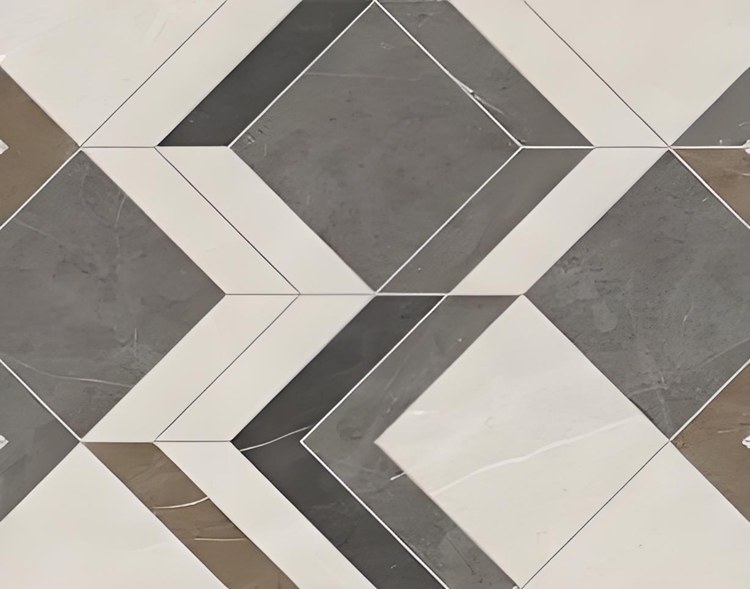

A 5 Axis CNC Stone Bridge Saw uses a diamond blade to cut stone mechanically, while a 5 Axis Water Jet Cutter uses a high-pressure water stream, usually combined with abrasive garnet, to cut through the material.
Understanding the differences between these two machines can help countertop manufacturers, stone fabricators, architectural companies, and industrial manufacturers choose a suitable CNC cutting solution.
5 Axis CNC Stone Bridge Saw vs 5 Axis Water Jet Cutter
The basic difference is the cutting method.
| Feature | 5 Axis CNC Stone Bridge Saw | 5 Axis Water Jet Cutter |
|---|---|---|
| Cutting method | Diamond blade | High-pressure water + abrasive |
| Cutting process | Mechanical cutting | Cold abrasive cutting |
| Granite | Excellent | Excellent |
| Marble | Excellent | Excellent |
| Quartz | Excellent with suitable tooling | Suitable configuration |
| Quartzite | Suitable tooling required | Suitable |
| Porcelain | Suitable blade required | Suitable |
| Metal | Generally not its primary purpose | Excellent |
| Straight cuts | Excellent | Excellent |
| 45° miter cuts | Excellent | Available |
| Curved cutting | Model dependent | Excellent |
| Intricate patterns | More limited | Excellent |
| Large-volume slab cutting | Highly suitable | Suitable |
| Edge finishing | Depends on configuration | Generally requires additional processing |
| Operating consumables | Diamond blades | Abrasive garnet + water |
| Main advantage | Fast stone cutting | Complex and versatile cutting |
The appropriate machine depends on the material, cutting geometry, production volume, and finishing requirements.
What Is a 5 Axis CNC Stone Bridge Saw?
A 5 Axis CNC Stone Bridge Saw is an automated stone cutting machine equipped with a diamond saw blade and a CNC-controlled multi-axis cutting system.

The machine can control the cutting head in multiple directions, allowing it to perform more than simple straight cuts.
Depending on the machine architecture, a 5-axis stone bridge saw can support:
- Straight cutting
- Diagonal cutting
- 45° miter cutting
- Bevel cutting
- Multi-angle cutting
- Countertop cutting
- Sink opening preparation
- Custom stone cutting

The exact definition of each axis varies between manufacturers, so buyers should always check the actual machine specifications and movement capabilities.
How Does a 5 Axis CNC Bridge Saw Work?
The process begins with a digital cutting design.
The operator can create or import the required geometry into the CNC control system or CAD/CAM software.
The machine then positions the stone slab and controls the cutting head according to the programmed tool path.
A diamond blade physically removes the stone as it moves through the material.
Water is normally supplied during cutting to help control heat and cutting dust.
This process is particularly effective for large stone slabs and production environments where repeated cutting is required.
What Is a 5 Axis Water Jet Cutter?

A 5 Axis Water Jet Cutter uses a high-pressure water stream to cut material.
For hard materials such as granite, marble, quartz, porcelain, and metal, abrasive garnet is commonly added to the water stream.
Instead of using a rotating blade, the waterjet cutting head follows a programmed CNC path.
This allows the machine to produce highly complex profiles, including:
- Curves
- Circles
- Internal holes
- Decorative patterns
- Logos
- Irregular shapes
- Stone inlays
- Custom components
A 5-axis waterjet can also provide angled or bevel cutting depending on the cutting head configuration.

Cutting Technology Comparison
Diamond Blade Cutting
The 5 Axis CNC Stone Bridge Saw uses a diamond blade.
Diamond tools are particularly effective for cutting hard stone slabs.
The blade rotates at high speed and mechanically cuts through the material.
This makes a bridge saw particularly useful when the majority of production consists of:
- Straight cuts
- Long cuts
- Countertop components
- Slab sizing
- 45° miter cuts
- Repetitive stone cutting
For a stone fabrication shop processing many countertops every day, this type of cutting workflow can be highly practical.
Abrasive Waterjet Cutting
A 5 Axis Water Jet Cutter uses a high-pressure water stream with abrasive material.
The cutting head can follow complicated CAD paths without requiring a physical saw blade to follow the shape.
This provides significant flexibility for custom designs.
Waterjet cutting is especially useful when the project requires intricate profiles that would be difficult to produce with a conventional diamond blade.
5 Axis Bridge Saw for Granite Countertops
Granite countertops are one of the most common applications for CNC bridge saws.
A 5-axis bridge saw can be used for:
- Kitchen countertops
- Kitchen islands
- Bathroom vanity tops
- Bar countertops
- Commercial countertops
- Granite stairs
- Architectural stone
For example, a fabricator may need to cut a large granite slab into several countertop sections and then create 45° miter cuts for a waterfall island.
A CNC bridge saw can automate much of this process.
5 Axis Waterjet for Granite
A 5-axis waterjet can also process granite countertops.
Its biggest advantage appears when the countertop requires complicated shapes.
For example:
- Curved countertops
- Irregular sink openings
- Decorative inlays
- Custom logos
- Complex geometric patterns
- Intricate internal cutouts
Instead of creating the shape mechanically with a blade, the waterjet follows the programmed CAD path.
Quartz Countertop Cutting
Both machines can be used for quartz countertop fabrication, but the workflow can differ.
5 Axis CNC Bridge Saw
A bridge saw is particularly suitable for:
- Slab sizing
- Straight cuts
- Angled cuts
- 45° miter cuts
- Repetitive countertop production
5 Axis Waterjet
A waterjet becomes more useful when the design includes:
- Complex curves
- Decorative patterns
- Intricate openings
- Custom inlays
- Unusual countertop shapes
For many countertop manufacturers, the decision depends on how much of their production consists of standard cuts versus customized shapes.
Porcelain Slab Cutting
Porcelain and sintered slabs require careful tooling and cutting parameters.
Both CNC bridge saws and waterjets can be configured for porcelain applications.
A bridge saw can be suitable for standard slab cutting and mitering when equipped with an appropriate blade.
A waterjet can be advantageous for complicated profiles and detailed designs.
The machine should always be selected according to the specific porcelain material, thickness, blade or abrasive system, and required finish.
45° Miter Cutting
45° miter cutting is an important application for stone countertop fabrication.
It is commonly used to produce:
- Waterfall countertops
- Mitered island edges
- Thick-looking countertop edges
- Architectural stone edges
A 5-axis CNC bridge saw can perform programmed miter cutting when the machine has the required blade tilting and positioning capabilities.
A 5-axis waterjet can also perform angled cutting when equipped with a suitable multi-axis cutting head.
For high-volume countertop miter production, the bridge saw workflow is often centered around fast mechanical slab cutting, while waterjet technology provides more flexibility for complex profiles.
Complex Shape Cutting
This is one of the biggest differences between the two machines.
A 5 Axis CNC Stone Bridge Saw is primarily optimized around saw-based stone cutting.
A 5 Axis Water Jet Cutter is particularly flexible for intricate shapes.
Waterjet technology can follow complicated CAD geometries such as:
- Free-form curves
- Small internal openings
- Decorative patterns
- Stone mosaics
- Logos
- Custom inlays
If your production mainly consists of rectangular countertops, straight cuts, and miter cuts, the bridge saw may provide the more direct production workflow.
If your business frequently produces complicated custom shapes, waterjet technology offers a different set of capabilities.
Cutting Speed and Production
Cutting speed depends on many factors, including:
- Material
- Material thickness
- Tool selection
- Machine configuration
- Cutting quality requirements
- Feed rate
- Pump or spindle power
- Cutting geometry
For large quantities of straightforward stone cuts, a diamond blade bridge saw can provide an efficient production workflow.
Waterjet cutting can take longer for some thick materials or complex geometries because the cutting process is based on material erosion rather than a rotating blade.
However, waterjet technology can eliminate certain secondary cutting operations when the required profile can be produced directly from the CAD file.
Therefore, cutting speed should not be evaluated using one machine specification alone.
Cutting Accuracy
Both technologies can provide high cutting accuracy when correctly configured and operated.
The final result depends on:
- Machine rigidity
- CNC control
- Tool condition
- Cutting parameters
- Material characteristics
- Operator setup
- CAD/CAM programming
A 5-axis waterjet can provide excellent profile accuracy for complex shapes.
A CNC bridge saw can provide highly repeatable dimensions for standard slab cutting.
The actual achievable tolerance should be confirmed with the manufacturer for the specific machine configuration.
Operating Costs
The two machines have different consumables and operating requirements.
Bridge Saw Consumables
A CNC bridge saw typically uses:
- Diamond blades
- Cooling water
- Electrical power
Blade life depends on the material, blade quality, cutting conditions, and maintenance.
Waterjet Consumables
A waterjet typically requires:
- Abrasive garnet
- High-pressure water
- Electrical power
- Pump maintenance
- Cutting nozzles and related wear components
Abrasive consumption can become an important operating cost for high-volume waterjet production.
When comparing machines, buyers should calculate the total operating cost rather than comparing only the purchase price.
5 Axis Bridge Saw vs 5 Axis Waterjet: Applications
| Application | 5 Axis Bridge Saw | 5 Axis Waterjet |
|---|---|---|
| Granite countertops | ✓ | ✓ |
| Marble countertops | ✓ | ✓ |
| Quartz countertops | ✓ | ✓ |
| Quartzite | ✓ | ✓ |
| Porcelain slabs | ✓ | ✓ |
| Straight slab cutting | ✓✓✓ | ✓✓ |
| 45° miter | ✓✓✓ | ✓✓ |
| Complex curves | ✓ | ✓✓✓ |
| Decorative inlays | Limited | ✓✓✓ |
| Intricate patterns | Limited | ✓✓✓ |
| Metal cutting | Limited | ✓✓✓ |
| High-volume slab cutting | ✓✓✓ | ✓✓ |
| Custom stone fabrication | ✓✓ | ✓✓✓ |
The symbols indicate relative application suitability rather than a standardized performance rating.
Which Machine Is Suitable for a Stone Fabrication Business?
The decision should be based on your actual production requirements.
Choose a 5 Axis CNC Stone Bridge Saw When:
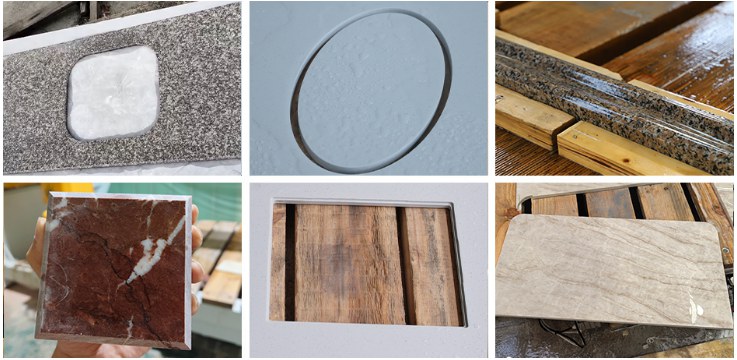
Your business mainly produces:
- Granite countertops
- Quartz countertops
- Marble slabs
- Straight cuts
- Large-format slab sections
- 45° miter cuts
- Repetitive stone components
A bridge saw is particularly focused on efficient stone sawing.
Consider a 5 Axis Water Jet Cutter When:
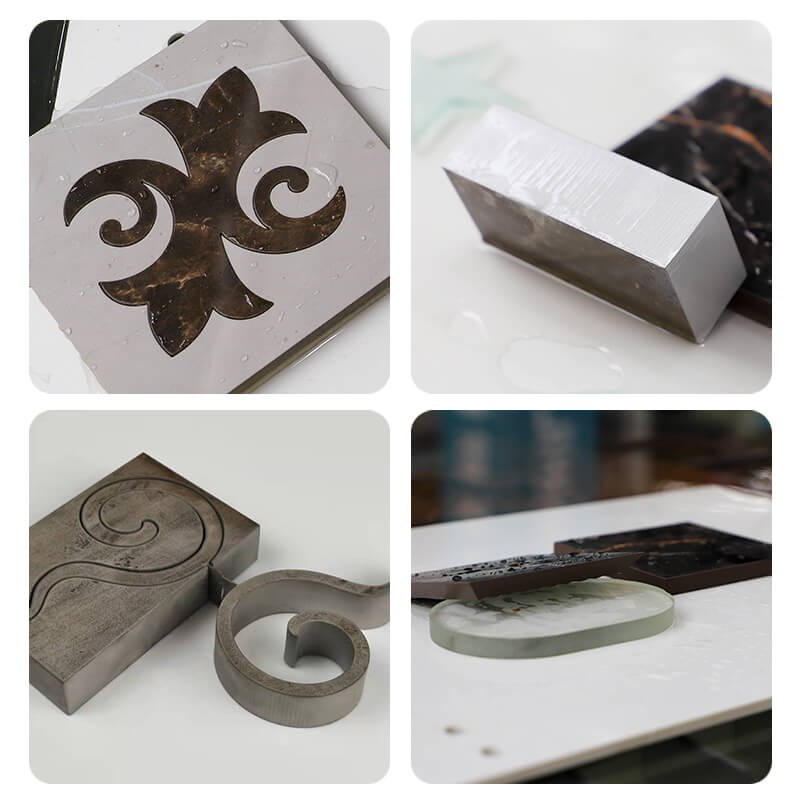
Your business frequently produces:
- Complex stone shapes
- Curved components
- Decorative inlays
- Intricate patterns
- Custom logos
- Mixed-material projects
- Metal components
Waterjet technology provides greater flexibility for complicated profiles.
Can a Bridge Saw and Waterjet Be Used Together?
Yes.
For larger stone fabrication businesses, a CNC Bridge Saw and CNC Waterjet can complement each other.
For example:
Bridge Saw → Main Slab Cutting → Waterjet → Complex Profiles → CNC Stone Machining → Edge Processing → Polishing
The bridge saw can handle major slab cuts, while the waterjet can handle detailed or unusual geometries.
This approach can reduce the need to force one machine to perform every type of cutting operation.
iGOLDENCNC 5 Axis CNC Stone Cutting Solutions
iGOLDENCNC provides CNC stone processing equipment for professional stone fabrication applications.
Its stone machinery solutions include CNC Bridge Saws and Stone CNC Machining Centers, designed for applications involving granite, marble, quartz, quartzite, porcelain slabs, and other stone materials.
For customers evaluating a 5-axis stone cutting solution, the appropriate machine configuration can be selected according to:
- Stone material
- Slab dimensions
- Material thickness
- Cutting geometry
- Miter requirements
- Production volume
- Automation requirements
Rather than selecting a machine simply because it has more axes, fabricators should consider the actual operations they perform every day.
Frequently Asked Questions
Is a 5 Axis Bridge Saw better than a 5 Axis Waterjet?
They are designed around different cutting technologies and applications. A bridge saw uses a diamond blade and is particularly suitable for stone slab cutting and mitering, while a waterjet provides greater flexibility for complex profiles and can process a broader range of materials.
Can a 5 Axis Bridge Saw cut quartz?
Yes. With suitable diamond tooling and machine configuration, a 5-axis bridge saw can be used for quartz slab and countertop cutting.
Can a 5 Axis Waterjet cut granite?
Yes. Abrasive waterjet technology is widely applicable to granite and other hard stone materials.
Which machine is better for 45-degree countertop cuts?
Both technologies can support angled cutting when properly configured. A 5-axis bridge saw is specifically well suited to blade-based miter cutting, while a 5-axis waterjet provides additional flexibility for complex profiles.
Which machine is better for complex stone shapes?
A 5-axis waterjet generally provides greater flexibility for intricate curves, internal profiles, decorative patterns, and custom inlays.
Can a waterjet replace a bridge saw?
In some workflows, a waterjet can perform many of the same cutting operations, but the two technologies have different strengths. A bridge saw remains highly useful for efficient large-volume slab cutting.
Can a stone fabrication shop use both machines?
Yes. A bridge saw and waterjet can complement each other, with the bridge saw handling primary slab cuts and the waterjet handling complex or intricate profiles.
IGOLDEN BLOG
Thank you for visiting the iGOLDENCNC website. iGOLDENCNC is the professional supplier of CNC machinery application solution, within the business of producing and selling CNC machinery and accessories.