
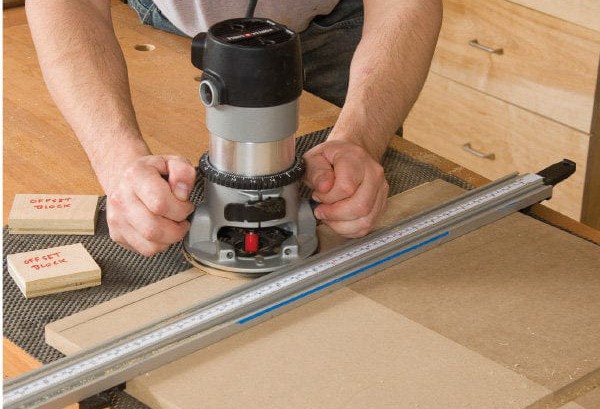
Think of a master sculptor, whose hands and experience are the only “program” needed to create a work of art. This is the heart of traditional machining. Here, the operator’s skill is the program; they don’t load a file but instead become the living brain of the machine through direct, hands-on control.
By turning heavy steel wheels and levers, the machinist guides the cutting tool with immense precision. They constantly pause the work, using calipers—a type of high-precision ruler—to measure the part. Each adjustment is a direct response to sight, sound, and a practiced feel for how the material is being shaped.
This raises a critical question about efficiency. For one-off jobs or repairing a single unique part, the answer is clear. In practice, the setup time and cost for a computer-controlled job can be prohibitive, making the flexibility of conventional machining the faster and more practical choice.
The Digital Blueprint: How CNC Machines Follow Instructions Perfectly
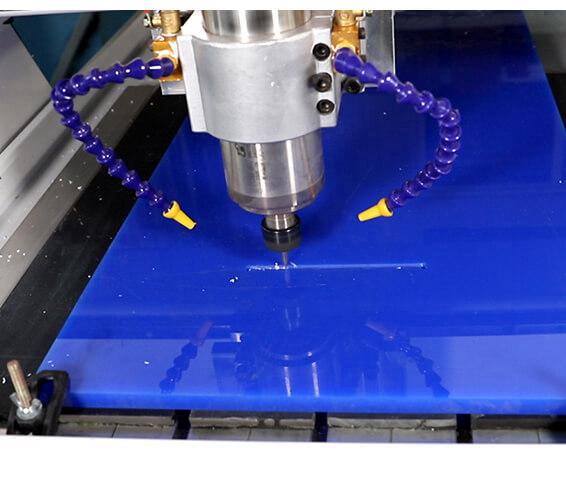
The “magic” behind this modern approach is right in the name: Computer Numerical Control (CNC). Instead of a human guiding the cutting tool by hand, a computer directs every movement with digital precision. It’s the difference between a sculptor carving a statue with a chisel and a robot arm carving the exact same statue by following a 3D scan.
This process starts with a digital design file, much like a 3D model or a detailed drawing created on a computer. Special software then translates that blueprint into a simple, step-by-step language the machine can understand. When the program runs, the CNC cutting machine executes these instructions perfectly, moving its cutter along the exact path needed to shape the material.
As a result, the machine operator’s role shifts from a hands-on carver to a high-tech supervisor. They prepare the raw material, ensure the correct tool is in place, and initiate the job. From there, automation takes over, allowing even a small CNC machine for metal to produce complex parts with a level of accuracy that is nearly impossible to replicate by hand, time and time again.
One-of-a-Kind vs. One Thousand of a Kind: The Showdown in Precision and Repeatability
A skilled machinist can pour their expertise into creating a single, beautiful part. But what if you need 5,000 identical brackets for a new product? Even the steadiest human hand introduces tiny, natural variations. This is fine for a one-off repair, but for mass production, those small differences would mean parts might not fit together correctly. This challenge highlights one of the key advantages of CNC over conventional machining.
This is where automation becomes a superpower. Because a CNC machine follows the exact same digital code for every cycle, it delivers near-perfect consistency. This is called repeatability. The first part off the line is a functional clone of the ten-thousandth, making CNC the undisputed champion for any significant production volume.
Beyond just making perfect copies, the level of detail is staggering. The difference between CNC precision vs manual precision can be understood like this: a human might work accurately to the width of a human hair, while a CNC machine can work with tolerances smaller than the thickness of a single sheet of paper. This ensures every piece not only matches the others but also perfectly matches the original digital blueprint.
Straight Lines vs. Intricate Curves: Which Method Handles Complex Designs?
A traditional machine is a bit like drawing with a ruler. By turning separate cranks for left-right and forward-back movements, an operator excels at creating perfect flat surfaces and simple geometric parts. The fundamental difference in CNC milling versus manual milling lies here; manual control is fantastic for straightforward designs but struggles when complex curves are needed.
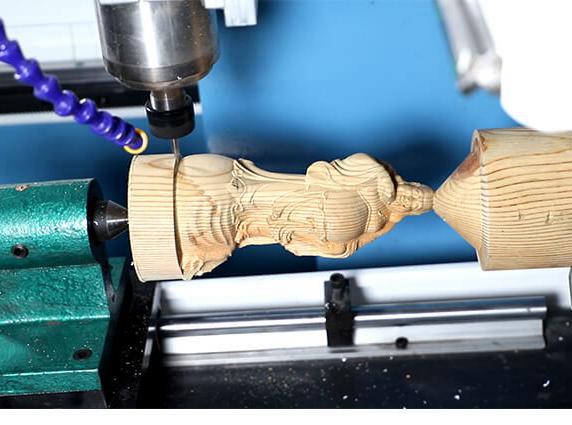
CNC machining, however, breaks free from these straight-line limits. Guided by a digital file, it can move its cutting tool in multiple directions at once—up, down, sideways, and diagonally—all in one smooth motion. Advanced systems can even tilt and rotate the tool, like a sculptor’s wrist. This is the secret behind effective CNC machining for complex parts, allowing for the creation of flowing shapes that are nearly impossible to make by hand.
This leap in capability unlocks a world of product design. Intricate parts like a custom prosthetic joint or the curved body of a high-end camera are carved from solid blocks. While both methods can handle various materials suitable for CNC and manual machining, only CNC can shape them with such sophisticated detail. But for simpler jobs, does all this advanced tech actually save time and money?
The Real Bottom Line: When is Traditional Machining Actually Faster and Cheaper?
It seems logical that a computer-run machine would always be the winner for speed and cost, but that’s not the whole story. For a single, simple part, a skilled machinist can often walk up to a traditional machine and create it faster than a programmer can write the code and set up a CNC machine. The upfront time investment for CNC is significant.
The key difference comes down to a trade-off: high setup cost versus per-part cost. The manual machining vs CNC cost is like this: Traditional machining has low setup costs but higher labor costs for every part made. CNC is the opposite, with high initial programming costs but extremely low costs once it’s running. This makes the cost-effectiveness of CNC for small runs a crucial factor; once you need more than a few identical items, CNC’s automated speed quickly pays for itself.
This creates a clear answer for when to use conventional machining. If you’re restoring a classic car and need one unique bracket, a traditional machinist is your best bet. But if you’re launching a product and need 1,000 of them, CNC is the only way to go. Ultimately, choosing between CNC and manual machining depends entirely on whether you’re making just one or many.
Sculptor or Robot? A Simple Guide to Choosing the Right Machining Process
You started this journey seeing machining as one complicated process. Now, you can distinguish between the artist’s touch of traditional work and the robot’s precision of CNC, ready to decide which is the right tool for the job.
Choosing between CNC and manual machining is simpler than you think. Just ask:
- Quantity: Do I need one, or thousands?
- Complexity: Is the design simple, or full of intricate curves?
- Consistency: Is this a unique piece, or must they all be perfect clones?
Suddenly, the logic is clear. A single prototype for a vintage car? Manual. A million smartphone bodies? CNC. You no longer see the manufactured world as a mystery, but as a series of deliberate, intelligent choices.
IGOLDEN BLOG
Thank you for visiting the iGOLDENCNC website. iGOLDENCNC is the professional supplier of CNC machinery application solution, within the business of producing and selling CNC machinery and accessories.