
The question comes up constantly in CNC machining, stone fabrication, woodworking, and precision manufacturing conversations worldwide. Should you invest in a 3 axis CNC machine or step up to a 5 axis system? Is the capability difference worth the cost difference? And what does “axis” actually mean in practical terms — not in the abstract language of technical specifications, but in the real-world terms of what jobs each machine can take on, what quality it delivers, and what return it generates for the business that owns it?
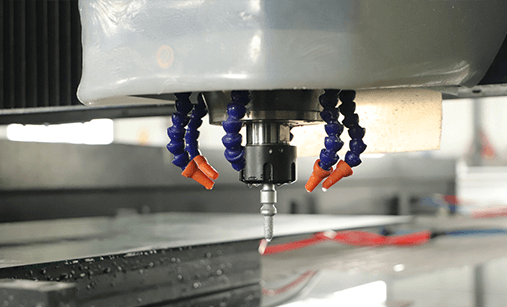
The honest answer is that neither configuration is universally superior. A 3 axis CNC machine is not a compromise or a stepping stone — it is the right tool for an enormous range of professional production work, and thousands of highly profitable fabrication businesses run on 3 axis systems without ever needing more. A 5 axis machine is not a luxury upgrade for its own sake — it is the appropriate investment when the specific geometric requirements of your product mix genuinely demand its capability, and a misallocation of capital when they do not.
This guide gives you a clear, practical understanding of both configurations — how each works, what each can and cannot do, where each delivers its best return, and exactly how to decide which one is right for your specific operation. Whether you are evaluating your first CNC investment or planning an upgrade from existing equipment, the framework in this guide will give you the confidence to make the right decision.
The Core Difference Between 3 Axis and 5 Axis CNC
The difference between a 3 axis and 5 axis CNC machine is not simply a matter of having more motors or more complexity. It is a fundamental difference in the range of geometric operations the machine can perform — and consequently in the range of products it can manufacture and the markets it can serve.
Axes Define Directions of Motion
In CNC machining, an axis is an independent direction of controlled motion. Every CNC machine — regardless of whether it cuts stone, routes wood, mills metal, or scores glass — controls its cutting tool or cutting head by moving it along these axes in programmed combinations. The number of axes determines how many independent directions of motion the machine can control simultaneously, and therefore how complex the cutting paths and geometries it can execute.
3 Axis: Three Linear Directions
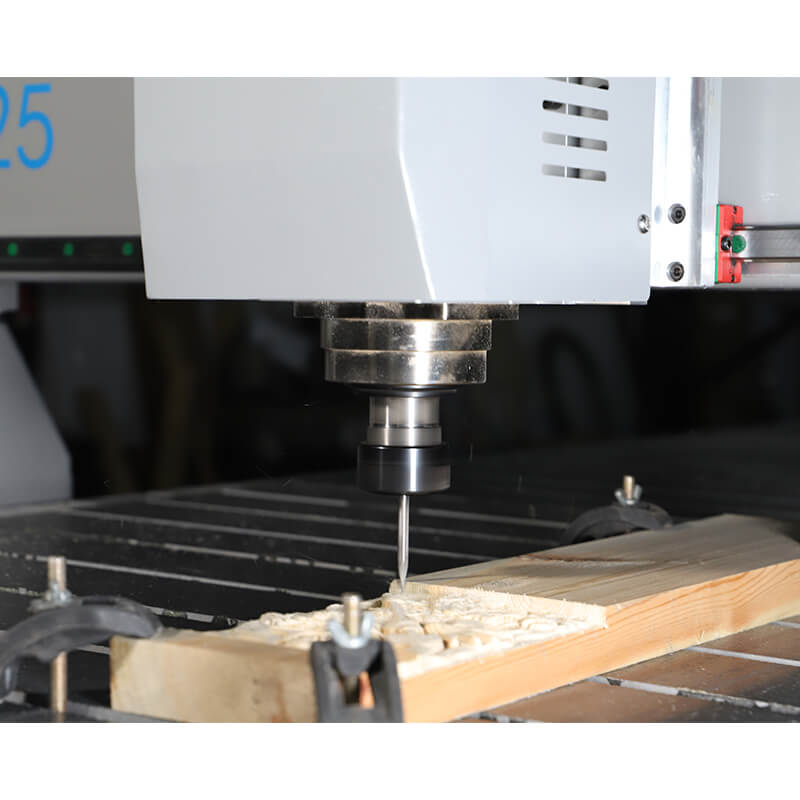
A 3 axis CNC machine controls motion along three linear axes: X (left-right), Y (front-back), and Z (up-down). The cutting tool moves in any combination of these three directions to reach any point in a three-dimensional working volume. What it cannot do is change its own orientation — the cutting tool always points in the same direction relative to the workpiece. For the vast majority of flat and prismatic machining work — cutting flat profiles, drilling holes, routing pockets, and profiling edges on materials that are presented to the machine in a fixed orientation — this is entirely sufficient.
5 Axis: Three Linear + Two Rotational
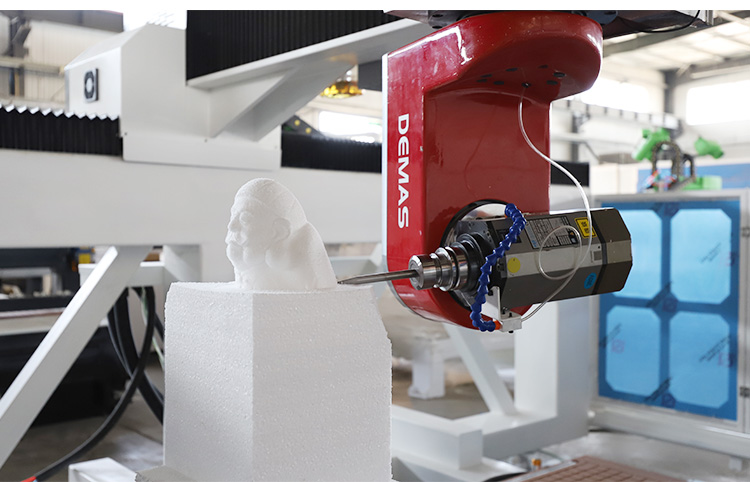
A 5 axis CNC machine adds two rotational axes to the three linear axes of a standard machine. These rotational axes — typically designated A (rotation around X), B (rotation around Y), or C (rotation around Z), depending on machine configuration — allow the cutting head or the workpiece itself to tilt and rotate, changing the orientation between the tool and the material during cutting. This additional freedom enables the tool to approach the workpiece from virtually any direction and to follow paths that a 3 axis machine cannot execute without stopping to manually reposition the workpiece.
How a 5 Axis CNC Machine Works
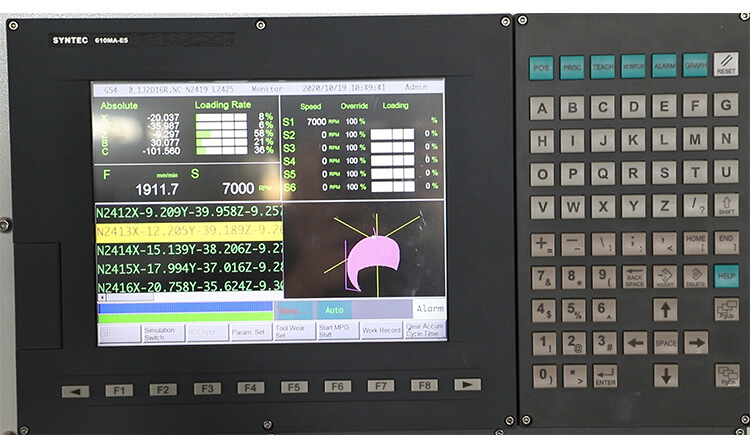
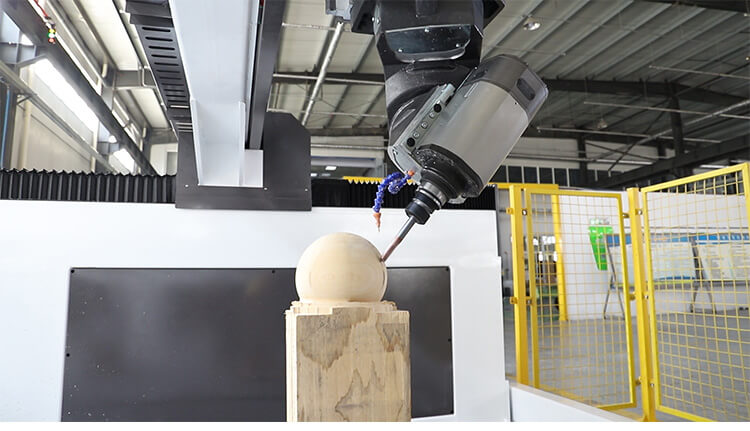
A 5 axis CNC machine adds two rotational axes to the three linear axes of a 3 axis machine. These rotational axes allow the cutting head, the workpiece table, or both to tilt and rotate during cutting — changing the angular relationship between the cutting tool and the workpiece continuously throughout the machining operation.
Simultaneous 5 Axis Interpolation
The defining capability of a true 5 axis machine is simultaneous interpolation — all five axes moving in continuous, mathematically coordinated relationship during a single cutting operation. This is fundamentally different from indexed or positional 5 axis operation, where the rotational axes move the head or table to a new fixed angle, lock, and then cutting proceeds with the linear axes only. True simultaneous 5 axis interpolation means the cutting tool can follow a continuously changing path through three-dimensional space while simultaneously changing its own orientation — enabling curved surfaces, undercuts, compound angles, and complex 3D geometries in a single uninterrupted operation.
What 5 Axis Motion Enables
With five axes operating simultaneously, a 5 axis CNC machine can machine features that are geometrically impossible for a 3 axis system without workpiece repositioning. It can cut diagonal paths across a surface at any angle. It can follow curved profiles while maintaining the optimal tool angle relative to the curve throughout. It can machine multiple faces of a complex part in a single setup by tilting the workpiece or head to present each face to the tool in sequence. It can produce compound miter cuts, curved countertop edges, complex architectural stone profiles, and 3D sculptural elements that 3 axis machines simply cannot reach.
The Complexity Trade-Off
Five axis capability comes with genuine complexity that must be factored into the investment decision honestly. Programming 5 axis toolpaths requires more advanced CAM software and more skilled programmers than 3 axis work. Setting up and maintaining five independently controlled axes — with their associated servo drives, encoders, mechanical components, and calibration requirements — is more demanding than maintaining three. And the interaction between five simultaneously moving axes means that a programming error or calibration issue can affect the accuracy of all operations in ways that are harder to diagnose than on simpler equipment.
How a 3 Axis CNC Machine Works
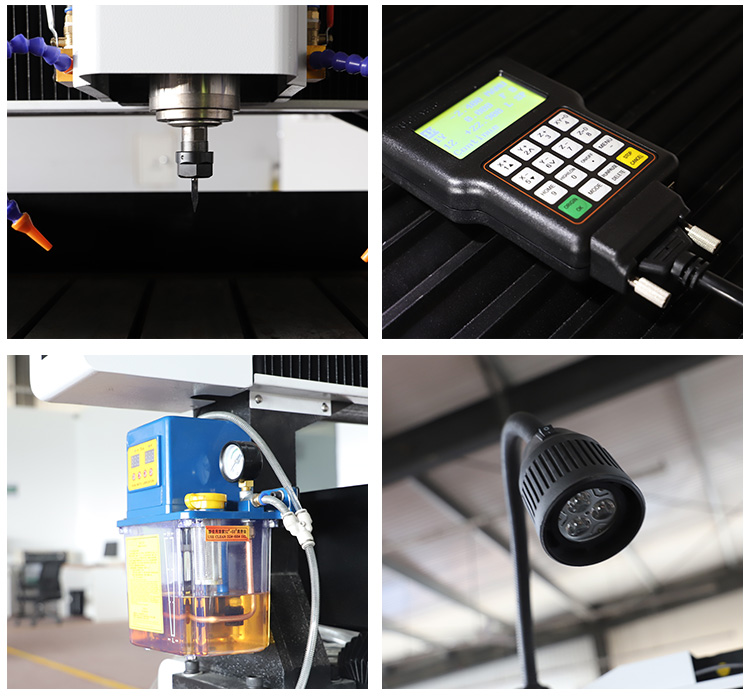
A 3 axis CNC machine moves its cutting head or cutting tool in three independent linear directions simultaneously — X, Y, and Z — following a programmed toolpath generated from a digital design file. The workpiece is fixed to the machine table in a single setup, and the tool approaches it from above, reaching any point on the accessible surface through combinations of X, Y, and Z motion.
What 3 Axis Motion Enables
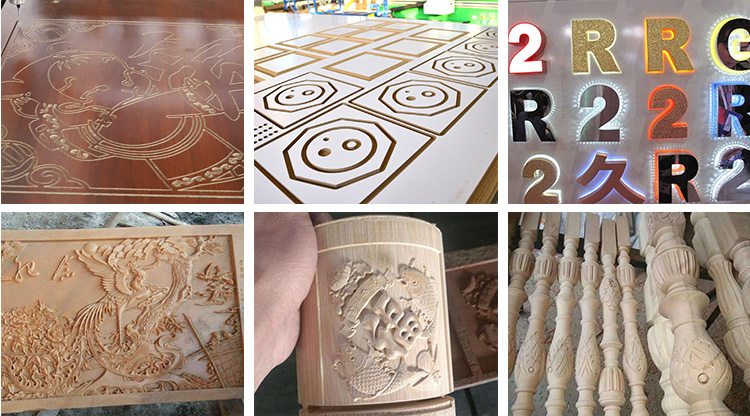
Within its three linear axes, a 3 axis CNC machine can execute an extraordinary range of operations. It cuts flat 2D profiles — any shape that can be drawn in a plane. It machines 3D contoured surfaces by moving all three axes simultaneously in coordinated motion — producing curved surfaces, relief carvings, and complex topographical shapes. It drills holes, routes pockets, executes edge profiles, and produces any geometry that can be accessed from a fixed tool orientation above the workpiece.
The Fixed Tool Orientation Limitation
The constraint of 3 axis machining is that the tool always approaches the workpiece from the same direction — straight down, or at a fixed angle if the tool is mounted at an angle in the spindle. This means features that require the tool to approach from the side, at a compound angle, or from underneath cannot be machined without physically removing and repositioning the workpiece on the table. On parts that require multiple-face machining — drilling holes on several faces, cutting profiles on edges that aren’t accessible from above, or creating undercuts — 3 axis machining requires multiple setups, each with its own alignment procedure and accumulated positioning error.
Where 3 Axis Excels
For the majority of flat panel work — cabinetry, furniture components, signage, countertop cutting, tile processing, and sheet metal fabrication — 3 axis machining covers the full range of operations required without limitation. The material is presented flat on the table, all required operations are accessible from above, and the 3 axis system executes them with excellent accuracy and production speed. The IGOLDENCNC 3 axis platform is the production backbone of thousands of professional fabrication operations worldwide precisely because 3 axis capability is genuinely sufficient for most of what those operations produce.
Capability Comparison — What Each Machine Can & Cannot Do
| Operation | 3 Axis CNC | 5 Axis CNC |
|---|---|---|
| Straight cuts in any direction | ✓ | ✓ |
| Flat 2D profile cutting | ✓ | ✓ |
| 3D contoured surface machining | ✓ (from above) | ✓ (any orientation) |
| Fixed-angle miter cuts | ✓ (if head tilts) | ✓ |
| Diagonal cuts without repositioning | ✗ | ✓ |
| True curved cutting paths | ✗ | ✓ |
| Compound angle cuts | ✗ | ✓ |
| Undercut features | ✗ | ✓ |
| Multi-face machining in one setup | ✗ | ✓ |
| Complex 3D sculptural profiles | Limited | ✓ |
| Programming complexity | Low–Medium | High |
| Operator skill requirement | Basic–Intermediate | Advanced |
| CAM software requirement | Standard | Advanced 5 axis |
Materials & Industries — Which Axis Configuration Fits Which Work
The axis configuration decision is not abstract — it is determined by the specific materials you process and the specific products your customers require. Here is how the two configurations map to the most common professional fabrication applications.
Stone Fabrication — Countertops, Architectural Stone & Monuments
For standard kitchen and bathroom countertops — rectangular pieces with straight edges, 45° miter joints, and sink cutouts — the IGOLDENCNC 3 axis bridge saw handles every operation required with excellent accuracy and production speed. The vast majority of standard countertop fabrication work is 3 axis work. The 5 axis IGOLDENCNC stone cutting machine becomes the right investment when curved countertop fronts, diagonal end cuts, complex architectural cladding panels, and compound miter profiles represent a meaningful share of your production. If curved and diagonal cutting accounts for less than 10% of your revenue today and your growth plan does not specifically target architectural stone work, a 3 axis system is the economically rational choice.
CNC Wood Routing — Cabinetry, Furniture & Signage
Cabinet door cutting, furniture component routing, nested sheet processing, and signage work are overwhelmingly 3 axis applications. The IGOLDENCNC 3 axis nesting CNC router handles this work comprehensively — cutting, drilling, pocketing, and profiling all operations in flat panel material that the cabinet and furniture industry demands. Five axis wood routing becomes relevant for curved architectural millwork, complex 3D carved furniture components, boat interior panels, and aircraft cabinetry — niche applications that most cabinet shops and furniture manufacturers never encounter in production volume.
Glass Processing
CNC glass cutting is fundamentally a 3 axis operation — the scoring head moves in X and Y across the flat glass surface while Z controls scoring depth and head elevation. The IGOLDENCNC CNC glass cutting machine handles all standard glass cutting including straight cuts, angled cuts, and complex curved profiles using its 3 axis platform with coordinated X and Y motion for curved scoring paths. Five axis capability is not a relevant specification in flat glass cutting applications.
Metal Fabrication & Precision Machining
Sheet metal cutting, plasma cutting, and laser cutting of flat metal components are 3 axis operations — the cutting head moves in X and Y across the sheet while Z manages cut height. Three axis CNC handles the full range of flat metal part profiles efficiently. Five axis machining becomes essential for complex aerospace components, turbine blades, mold cavities with deep undercuts, and precision mechanical components that require multi-face machining in a single setup — applications found in aerospace, automotive tooling, and advanced precision manufacturing rather than general metal fabrication.
IGOLDENCNC 3 Axis vs 5 Axis Machine Lineup
IGOLDENCNC 3 Axis Solutions
The IGOLDENCNC 3 axis product range covers the full spectrum of professional flat and prismatic fabrication work — from entry-level CNC routing tables for small cabinet shops through fully automated nesting CNC routers for large furniture factories, and from standard 4 axis CNC bridge saws for countertop fabrication through fully automatic CNC glass cutting lines for large glass processors. Every IGOLDENCNC 3 axis machine is engineered for production reliability, multi-material capability through parameter adjustment rather than tooling changes, and full integration with the digital templating and production management software that modern fabrication businesses run on.
IGOLDENCNC 5 Axis Solutions
The IGOLDENCNC 5 axis product range delivers true simultaneous 5 axis interpolation across stone cutting, wood routing, and precision machining applications. The IGOLDENCNC 5 Axis CNC Stone Cutting Machine handles the full range of architectural and custom stone fabrication work — curved countertop profiles, diagonal cuts at any angle, compound miter joints, and complex cladding panel geometries — in a single setup without workpiece repositioning. The IGOLDENCNC 5 Axis CNC Router handles complex 3D woodwork, curved architectural millwork, and precision component machining where the geometric demands of the product exceed 3 axis capability.
The IGOLDENCNC Advantage Across Both Configurations
Regardless of axis configuration, every IGOLDENCNC machine delivers the same core advantages: heavy-duty frame construction for rigidity under production cutting loads, servo drive systems for positional accuracy and dynamic response, multi-material parameter libraries that configure the machine optimally for each material through software adjustment, digital template integration for direct workflow from field measurement to machine program, and the IGOLDENCNC after-sales support network with remote diagnostic capability and local service availability.
Is a 5 axis CNC machine always better than a 3 axis machine?
No — and this framing is one of the most persistent misconceptions in CNC equipment evaluation. A 5 axis machine is better than a 3 axis machine only for operations that specifically require 5 axis capability — curved cutting paths, diagonal cuts without repositioning, compound angle operations, and multi-face machining in a single setup. For operations that a 3 axis machine handles completely — which describes the majority of flat panel fabrication, standard countertop production, sheet glass cutting, and conventional routing work — a 3 axis machine delivers equivalent or better results at lower capital cost, lower operating cost, and with less programming complexity. The right machine is the one that matches your work, not the one with the highest axis count.
IGOLDEN BLOG
Thank you for visiting the iGOLDENCNC website. iGOLDENCNC is the professional supplier of CNC machinery application solution, within the business of producing and selling CNC machinery and accessories.